MI fiberglass construction with factory pre-connected cold leads — and a self-regulating variant. Floor and space heating: embedded in cementitious material. Slab heating: adhered to underside of concrete slab. ETL listed. 10-year warranty.

Cozy Heat is Heatizon’s line-voltage electric radiant heating cable for interior floor warming, total space heating, and slab heating — available in two variants. The MI fixed-length variant uses the same mineral-insulated construction as Heatizon’s Hott-Wire cable: a central copper conductor surrounded by fiberglass insulation compressed inside a copper outer tube with an HDPE jacket, with cold leads factory pre-connected at both ends. The self-regulating cut-to-length variant automatically adjusts heat output based on surrounding temperature and is cut to length on site. Both variants are ETL listed and operate at line voltage — 120V, 208V, 240V, or 277V (480V/600V MI) direct from the supply panel, no step-down transformer required.
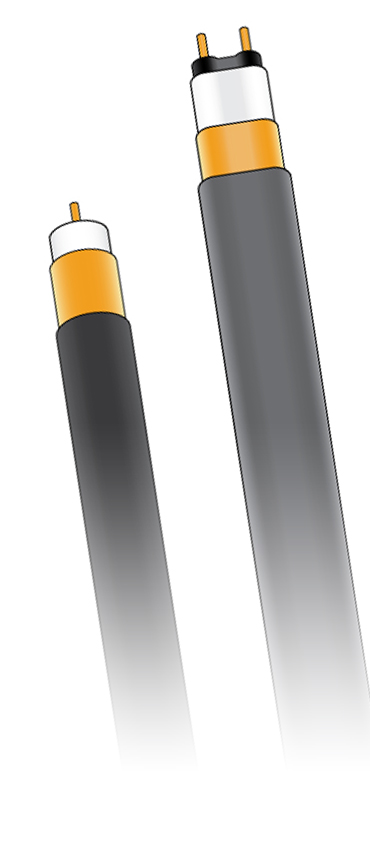
Two applications, two installation methods
Cozy Heat serves two distinct applications — and the installation method differs between them.
Floor and space heating uses Cozy Heat cable embedded in a cementitious material — mortar, standard concrete, or lightweight concrete — beneath the finished floor surface. The cable is laid at the spacing specified in the system design, and the cementitious layer is applied over the top before the floor covering is installed. The cementitious embed acts as the heatsink, distributing heat evenly across the floor surface above and warming the space above it. This configuration can provide comfort floor warming or serve as the primary heat source for an entire room, zone, or building depending on the watt density specified.
Slab heating and heat loss prevention uses Cozy Heat cable adhered to the underside of an existing concrete slab using heavy-duty aluminum tape and mechanical fasteners. The cable does not need to be embedded — it heats the slab from below, preventing heat loss through the concrete and maintaining the temperature of the space beneath. This method is used when access to the underside of an existing slab is available and a new pour is not feasible or required. System design targets 5–15 watts per square foot of slab surface, depending on insulation values, slab thickness, and the heat loss characteristics of the space.
MI fixed-length cable
The MI Cozy Heat cable uses the same industrial-grade mineral-insulated construction as Heatizon’s Hott-Wire — a technology first patented in 1896 and used in nuclear reactors, military equipment, and fire alarm systems for its extraordinary resistance to heat, moisture, and mechanical damage. Heatizon’s version uses fiberglass as the mineral insulation rather than the magnesium oxide (MgO) used in most MI cables. MgO is hygroscopic — it absorbs moisture over time, degrading insulation and eventually causing cable failure. Fiberglass is chemically inert and does not absorb moisture, making it more resistant to the humidity and temperature cycling of an interior installation over decades of use.
Cold leads are factory pre-connected at both ends of the MI variant — no field splicing required. The installer routes the cold leads from the heated zone to the panel and terminates them directly.
The MI variant produces 11.5–20 watts per lineal foot at constant wattage. It is a fixed-length product — cable length is specified and ordered based on the system design before installation begins. It is the right choice for large commercial and industrial floor heating, slab heating, and any application where maximum, consistent heat output is the priority.
Self-regulating cut-to-length cable
The self-regulating Cozy Heat variant automatically adjusts its heat output based on the surrounding temperature — producing more heat when conditions are cool and less as the floor or slab reaches temperature. The cable cannot overheat, making it tolerant of irregular spacing during installation. It is cut to length on site — no pre-ordering to exact specifications required.
The self-regulating variant produces 5,9, or 12 watts per lineal foot and is suited to smaller or irregularly shaped floor areas, retrofit projects where the cable layout is finalized on site, and well-insulated buildings or milder climates where lower maximum output is sufficient. For large-area installations or slab heating where consistent maximum output is required throughout, the MI variant is the recommended choice.
Technical specifications
| Cozy Heat MI | Cozy Heat SR | |
| Output | 11.5–20 watts per lineal foot | 5,9, or 12 watts per lineal foot |
| Wattage type | Constant wattage | Self-regulating |
| Cable construction | Copper conductor, fiberglass insulation, copper outer tube, HDPE jacket | Self-regulating polymer core, outer jacket |
| Insulation | Fiberglass — inert, moisture-resistant | Polymer core |
| Cold leads | Factory pre-connected — no field splicing | Field-terminated |
| Sizing method | Fixed-length — ordered to exact project spec | Cut to length on site |
| Voltage type | Line voltage — 120V, 208V, 240V, 277V, 480V, 600V | Line voltage — 120V, 208V, 240V, 277V |
| Floor/space heating | Embedded in mortar, concrete, or lightweight concrete | Same |
| Slab heating | Adhered to underside of slab — aluminum tape and fasteners | Same |
| Heat output target | 3–15 watts/sq ft for slab heating | Same |
| Safety listing | ETL listed — NRTL certified, United States | Same |
| Warranty | 10 years (manufacturer) | Same |
| Country of origin | United States of America | Same |
Applications
Cozy Heat is suitable for interior floor warming and total space heating in concrete floors, tile and stone floors, and most floor coverings over a cementitious embed. For slab heating and heat loss prevention, it is installed on the underside of existing concrete slabs in basements, crawlspaces, and below-grade spaces. Applications include:
- Residential: cabins, homes, basements, sunrooms, additions, beach homes, and retrofits
- Commercial: offices, retail spaces, warehouses, and commercial buildings
- Industrial: manufacturing facilities, remote locations, and industrial buildings
For smaller residential floor areas, Heatizon’s Floorizwarm system provides a complete low-voltage kit designed specifically for smaller zones. Heatwave, the line-voltage floor heating system available in 120 or 240 volts, cable or mat, is available for sizes from 8 to 240 square feet, pre-kitted for easy purchasing and installation.
For low-voltage floor heating across larger areas — tile, stone, hardwood, and carpet — ZMesh and Tuff Cable are Heatizon’s recommended alternatives where line-voltage is not preferred.
Learn more about Heatizon’s floor heating and space heating applications
The same cable as Hott-Wire — different application
Cozy Heat and Heatizon’s Hott-Wire cable share identical construction: central copper conductor, fiberglass mineral insulation, copper outer tube, HDPE jacket. The MI fixed-length variant of both products ships with cold leads factory pre-connected at both ends — no field splicing required. The self-regulating variant of both is cut to length on site.
The distinction between the two products is application, not quality. Hott-Wire is rated and specified for outdoor snow melting — in concrete, asphalt, pavers, and hot-pour applications. Cozy Heat is rated and specified for interior floor warming, total space heating, and slab heating. Both carry the same 10-year manufacturer warranty. Both are ETL listed. Both use fiberglass insulation rather than the magnesium oxide (MgO) used in most MI cables — avoiding MgO’s hygroscopic weakness in moisture-exposed installations.
For a specifier or inspector who needs to verify cable quality: Cozy Heat and Hott-Wire are the same cable. The ETL listing file is available on request from Heatizon for verification.
A listed MI cable rated for slab underside installation
Cozy Heat’s slab heating installation method — adhering the cable to the underside of an existing concrete slab using aluminum tape and mechanical fasteners — is a specific, practical approach to heat loss prevention that most standard electric floor heating cables are not designed to handle. Most thin-wire residential floor heating cables require embedding in a new pour or mortar bed above the slab. Cozy Heat’s MI construction — copper conductor inside fiberglass insulation inside a copper outer tube — is rated for the mechanical demands of being fastened to a concrete surface and left exposed on the underside of a slab for decades. This makes it a strong specification for:
- Existing basement slabs where a new pour above is not feasible
- Below-grade spaces where heat loss through the slab is the primary problem
- Industrial and commercial floors where surface disruption is unacceptable
- Remote locations and off-grid structures where the slab is the primary thermal mass
Cozy Heat is ETL listed, carries a 10-year manufacturer warranty, and is available from Heatizon with system design assistance to confirm the right cable spacing and watt density for the specific slab thickness, insulation values, and heat loss requirements of the project.
See Heatizon’s full slab heating and heat loss prevention systems for application detail, watt density targets, and installation guidance.
Why specify Cozy Heat
The electric radiant floor heating market is dominated by thin resistance-wire cables targeting small residential areas — bathroom floors, kitchen entries, and mudrooms — at 120V or 240V. These products are well suited to what they’re designed for. Cozy Heat is in a different category.
Cozy Heat uses the same mineral-insulated fiberglass construction as Heatizon’s Hott-Wire — a cable architecture first patented in 1896 and deployed in nuclear reactors, military equipment, and fire alarm systems for its extraordinary resistance to heat, moisture, and mechanical damage. Where standard thin-wire floor heating cables use a simple resistance wire in a plastic jacket, Cozy Heat’s MI construction places a copper conductor inside fiberglass insulation compressed within a copper outer tube and HDPE jacket. Fiberglass is chemically inert — it does not absorb moisture, does not degrade in wet environments, and does not change its electrical properties over decades of use. This is the construction that backs a 10-year manufacturer warranty — significantly longer than the warranties carried by most competing electric floor heating products.
Cozy Heat is ETL listed by Intertek — an OSHA-recognized Nationally Recognized Testing Laboratory — carrying equal legal standing to a UL listing across the United States. It is available at line voltage — 208V, 240V, 277V, 480V, or 600V direct from the supply panel — making it the right specification for commercial and industrial floor heating and slab heating projects where low-voltage residential systems are impractical for the scale of the installation.
Complete the system
Cozy Heat pairs with Heatizon’s full range of thermostats, programmable controls, and relay panels. For multi-zone installations, a relay or contactor panel allows a single thermostat to activate multiple Cozy Heat circuits simultaneously. Zone-designed systems provide comfort and energy efficiency by heating specific areas only at the times they are needed.
Built by Heatizon — US manufacturer since 1979
Heatizon Systems has designed and manufactured electric radiant heating products in the United States since 1979. Cozy Heat is one of two MI cable products in Heatizon’s lineup — alongside Hott-Wire for outdoor snow melting — and shares the same listed, fiberglass-insulated construction that has been installed in thousands of projects across residential, commercial, and industrial applications.
Every Cozy Heat system is designed for the specific project — watt density, cable spacing, zone configuration, and control strategy are all specified based on the building’s heat loss characteristics, insulation values, floor covering, and climate. For floor and space heating projects requiring a low-voltage alternative, Heatizon’s ZMesh and Tuff Cable provide listed, low-voltage options for the same application. For smaller residential floor areas, Floorizwarm provides a complete low-voltage kit designed for areas up to 110 square feet. Heatwave is another option for line-voltage heating for areas under 240 square feet, that come in a convenient kit form.
Frequently Asked Questions
Cozy Heat Floor-Space Heating
Cozy Heat carries a 10-year manufacturer’s warranty across both the MI fixed-length and self-regulating variants — backed by the same mineral-insulated fiberglass construction used in Hott-Wire, which provides exceptional resistance to moisture, mechanical damage, and temperature extremes over the life of the installation.
Yes. The MI Cozy Heat cable — at 11.5–20 watts per lineal foot — can provide sufficient heat output for total space heating in residential and commercial buildings, including cabins, homes, basements, sunrooms, commercial buildings, and industrial facilities. System design targets 5–15 watts per square foot of heated area depending on the building’s heat loss characteristics, insulation values, and climate. The Cozy Heat system is designed and specified by Heatizon’s team to meet each project’s heat loss requirements — not sized to a generic formula.
Cozy Heat systems can be controlled by a programmable thermostat for individual zone control — specifying the temperature and schedule for each heated area independently. For larger installations with multiple heating circuits, a relay or contactor panel allows a single thermostat or control device to activate multiple zones simultaneously. Zone-designed systems provide comfort and energy savings by heating specific areas only when needed.
Cozy Heat operates at line voltage — 120V, 208V, 240V, or 277V (480V/600V for MI) — supplied directly from the building’s electrical panel without a step-down transformer. This makes it well suited to commercial and industrial floor and slab heating projects where line-voltage supply is standard and transformer-based low-voltage systems are impractical for large areas.
Yes for floor and space heating — the cable must be embedded in a cementitious material such as mortar, standard concrete, or lightweight concrete. The cementitious heatsink is essential for even heat distribution across the floor surface above; without it, heat concentrates at the cable rather than spreading across the floor. For slab heating and heat loss prevention, the cable is adhered directly to the underside of the concrete slab — the slab itself acts as the thermal mass, and no separate heatsink embed is required.
Yes. The self-regulating variant can be used for slab heating applications — adhered to the underside of the concrete slab using aluminum tape and fasteners, as with the MI variant. The SR variant’s self-regulating characteristics mean it will reduce output as the slab reaches temperature, providing built-in energy efficiency without requiring a separate thermostat to manage overheating. For higher heat loss requirements where maximum output is needed consistently, the MI variant is the recommended choice.
Choose the self-regulating Cozy Heat cable for smaller or irregularly shaped floor areas, retrofit projects where the exact cable layout is finalized on site, and applications in milder climates or well-insulated buildings where the lower maximum output of a self-regulating cable is sufficient. The SR variant produces 5,9, or 12 watts per lineal foot and adjusts its output automatically based on surrounding temperature — it cannot overheat and is tolerant of irregular spacing during installation.
Cold leads are the non-heating sections of cable that connect the heating element to the electrical panel. Standard MI cables require cold leads to be spliced on-site — adding labor time and introducing a potential failure point at the splice. Cozy Heat’s MI cable ships with cold leads already connected at both ends from the factory. The installer routes the cold leads from the heating zone to the panel and terminates them — no specialized splicing tools or additional field connections required.
For slab heating and heat loss prevention, the MI Cozy Heat cable is adhered to the underside of a concrete slab using aluminum tape and fasteners — not embedded in the slab itself. This configuration allows the cable to heat the slab from below, preventing heat loss through the concrete and maintaining the temperature of the space above. This installation method is used when access to the underside of an existing slab is available and embedding in a new pour is not feasible or required.
For floor and space heating, the MI Cozy Heat cable is embedded in a cementitious material — mortar, standard concrete, or lightweight concrete — beneath the finished floor surface. The cable is laid at the spacing specified in the system design, and the cementitious layer is applied over the top before the floor covering is installed. The heatsink provided by the cementitious embed distributes heat evenly across the floor surface above.
Choose the MI fixed-length Cozy Heat cable for large commercial and industrial floor heating projects, slab heating applications, and any installation where maximum watt output and long-term durability are the priority. The MI variant produces 11.5–20 watts per lineal foot — the higher end of the range needed for total space heating and demanding heat loss prevention applications. Because it is a fixed-length product, the cable length must be specified and ordered based on the system design before installation begins.
Yes. Cozy Heat is ETL listed — the same listing that covers Heatizon’s Hott-Wire cable, reflecting their identical cable construction. ETL listing is issued by Intertek, an OSHA-recognized Nationally Recognized Testing Laboratory carrying equal legal standing to UL and CSA listings in the United States.
Cozy Heat serves two distinct applications, each with a different installation method. The first is floor and space heating — where the cable is embedded in a cementitious material such as mortar, concrete, or lightweight concrete beneath the floor covering, warming the floor surface and the room above. The second is slab heating and heat loss prevention — where the cable is adhered to the underside of an existing concrete slab using aluminum tape and fasteners, preventing heat loss through the slab and maintaining the temperature of the space above. The installation method, cable spacing, and watt output target differ significantly between the two applications.
Cozy Heat and Hott-Wire share the same fundamental cable construction — both are mineral-insulated line-voltage cables with fiberglass insulation, a copper outer tube, HDPE jacket, and factory pre-connected cold leads on the MI variant. The difference is application: Hott-Wire is designed and rated for outdoor snow melting in concrete, asphalt, and pavers. Cozy Heat is designed for interior floor warming, space heating, and slab heating applications. Both are ETL listed and available in MI fixed-length and self-regulating cut-to-length variants.
Cozy Heat is Heatizon’s line-voltage electric radiant heating cable for interior floor warming, space heating, and slab heating — available in two configurations. The MI (mineral-insulated) fixed-length variant uses a central copper conductor surrounded by fiberglass insulation compressed inside a copper outer tube with an HDPE jacket, factory-terminated with pre-connected cold leads at both ends. The self-regulating cut-to-length variant automatically adjusts its heat output based on ambient temperature and is cut to length on site. Both variants are ETL listed and operate at line voltage — no step-down transformer required.
