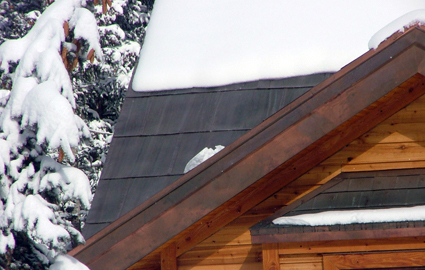
 Heatizon roof deicing systems, ice dam prevention products, and heat tracing cables using Tuff Cable, ZMesh, and GutterMelt help prevent snow and ice problems on roofs and ease the potential liabilities caused by snow and ice around eaves, drains, valleys, entire roof systems and any pathways where water or fluids have the potential to freeze.
Heatizon high performance low voltage systems are installed under the roof for longevity and reliability while our line voltage heat tracing cables are installed on top of roofs, in gutters and downspouts, and along pipes to preventive dams and snow buildup.
We recommend the heat you need:
Our products are customized to provide the right amount of heat for different applications and to melt snow and prevent ice dams effectively and efficiently. Our products have been vigorously tested by ETL for snow melting and roof deicing on roofs and we carry separate listings for our heated driveway/exterior surface snow melting systems and heated floor systems.
ZMesh and Tuff Cable are the only products authorized (UL 1588) to melt snow and ice installed under roofing materials, including metal roofing.
Select a Roof & Gutter application to learn more about how to prevent Ice Dams, Control Icicles and Snow Loads, and keep liquids flowing with our brand products below:
METAL ROOF DEICING
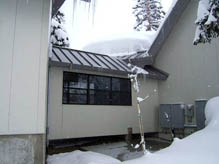
Tuff Cable in our patented heatsink kit or Invizimelt Panel solves ice dam and snow load problems for any metal roofing application.
- Tuff Cable in our Invizimelt Panel solves ice dam and snow load problems for any metal roofing system.
NON-METAL ROOF DEICING
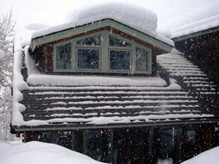
ZMesh is installed under new or existing asphalt/shake/tile shingles, making it ideal roof deicing solution for new construction or remodeling.
- ZMesh is installed under new or existing asphalt/shake/tile shingles, making it ideal for new construction and remodeling.
HEAT TRACING CABLES
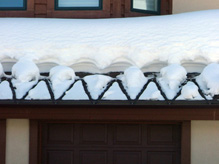
GutterMelt is a self regulating or mineral insulated heat trace or tape that prevents ice dams and keeps water flowing for gutters, pipes or on top of roofs.
- GutterMelt is a self regulating or a mineral insulated heat tape that keeps water flowing whether it be gutters or on roofs.
MEMBRANE ROOF DEICING
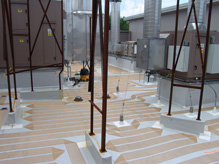
ZMesh and Tuff Cable are perfect hidden solutions to control snow loads and drainage while deicing on membrane roofs.
- ZMesh is installed under new or on top of existing membranes to alleviate snow loads.
- Tuff Cable in our Invizimelt Panel solves snow load issues on membrane roofs.
DECK DEICING SYSTEMS
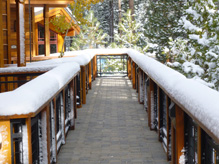
Tuff Cable, Hott-Wire and ZMesh can be used for different deck deicing applications. We recommend the right system for your application.
- ZMesh is installed under new or existing non-conductive decking materials, making it ideal for new construction and remodeling.
- Tuff Cable in our Invizimelt Panel remedies icing and snow removal for some decks.
- Hott-Wire in our Pedestal Paver or Deck Heating system can clear deck spaces and keep snow and ice from accumulating.
ROOFTOP PEDESTAL PAVER SYSTEMS
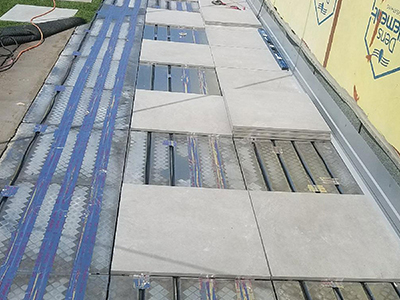
Heatizon’s patented Pedestal Paver Heating system can provide a complete solution for snow melting on rooftop pedestal paver systems.
- Pedestal Paver Heating using Hott-Wire to clear walking spaces for leisure or critical access and can be used for new projects of retrofitting in existing projects.
Worry Free Reliability
The entire line of Heatizon roof deicing and ice dam prevention products are solid state, have no moving parts to wear out, and have nothing that requires routine maintenance. In addition, our quality roof heating elements are the longest lasting available and backed by our industry leading warranties. An automated on/off activation device makes the safety of and operation of our heated roof systems a “no brainer.”
Cost Effective to Save Energy
Our roof deicing and ice dam prevention systems are designed to operate only when necessary and can be programmed to turn on automatically only when needed. These activators use advanced temperature and moisture sensing technology making them efficient and effective while minimizing operating costs. Our Design Engineers will be able to estimate hourly rates for each system based on our years of operating data and current electrical rates.
Frequently Asked Questions
Roof Deicing & Heat Cables
Decks over a heated living space or roof present a secondary concern — meltwater from the deck can run down onto the roof beneath and refreeze, forming ice dams at the roof edge. Installing a roof deicing system on the roof below the deck — ZMesh for non-metal roofing or Tuff Cable in Invizimelt for metal roofing — ensures meltwater has a complete path off the building without backing up under the roof edge.
For decks adjacent to gutters or downspouts, pairing the deck pan system with GutterMelt keeps the full drainage path clear — meltwater from the heated deck needs to flow freely through gutters and downspouts to the ground. GutterMelt is recommended wherever deck meltwater drains into a gutter system.
A GutterMelt kit includes the heating cable with a factory-attached 6-foot power cord and LED plug, downspout brackets, roof clips, a complete installation and instruction manual, and access to Heatizon’s technical support team.
Yes. GutterMelt cable and kits can be installed in existing gutters and downspouts without modification to the gutter system itself. The cable is secured using hangers and clips designed for the installation, making it a straightforward retrofit for homes and buildings experiencing ice dam or gutter freezing problems.
GutterMelt is recommended for use in conjunction with a roof deicing system such as ZMesh or Tuff Cable in Invizimelt. GutterMelt protects gutters and downspouts, but meltwater coming off a roof still needs somewhere to go — pairing GutterMelt with an under-roof or surface deicing system ensures water has a clear path off the building rather than just clearing the gutters in isolation.
GutterMelt can be thermostatically controlled, hard-wired, or sensor-controlled, depending on the installation. For larger commercial projects, Heatizon offers a variety of relay panels that allow multiple circuits to be controlled from a single activation device. Automatic sensors that detect moisture and temperature are the recommended activation method for energy efficiency — the system only runs when conditions require it.
GutterMelt kits include downspout hangers and roof clips for straightforward installation in gutters, downspouts, and along roof eaves. Bulk GutterMelt cable is installed by a contractor or electrician according to a project-specific layout, typically run in a zigzag pattern along the eave and straight down through downspouts and drains. Cable can be cut to length in the field for custom runs.
GutterMelt’s cable construction is engineered to prevent water wicking along the length of the cable — a common failure point in lower-quality heat trace cables where water travels along the cable jacket and causes internal damage or shorting over time. This construction detail contributes directly to GutterMelt’s industry-leading warranty length.
Pre-configured GutterMelt kits are available in standard lengths of 10, 30, 50, 70, 90, 110, and 130 linear feet. GutterMelt sold by the foot can be cut to any length required for the project, giving installers flexibility for non-standard gutter and downspout configurations.
GutterMelt is available in 120V, 208V, 240V, and 277V configurations. Pre-configured kits are sold in 120V with a factory-attached plug; bulk cable sold by the foot is available across the full voltage range for custom commercial and residential installations.
GutterMelt SR cable produces 5, 9, 12, or up to 24 watts (CW version only) per linear foot at 32°F in snow and ice conditions, depending on the wattage rating selected for the project. Heatizon’s design team specifies the correct wattage based on climate, gutter/downspout size, and the specific freeze protection requirements of the installation.
Constant Wattage GutterMelt produces a fixed heat output regardless of ambient temperature, unlike the self-adjusting SR version. It’s typically specified for longer cable runs or larger commercial systems where consistent, predictable wattage across the entire length is required for accurate system design. Both SR and CW versions are listed to UL and CSA standards and carry Heatizon’s standard warranties based on per-foot vs. kit purchase.
Yes. GutterMelt SR cable is safe for use with plastic downspouts because of its self-regulating heating characteristics — the cable cannot overheat, since its heat output decreases as the surrounding temperature rises. This makes it safe on materials that would be damaged by a constant-output cable running too hot in warmer conditions.
Yes. GutterMelt is ETL listed for the United States and Canada, certified to UL and CSA standards.
GutterMelt cable sold per foot carries a 10-year manufacturer’s warranty. Pre-configured cordset kits carry a 5-year warranty. The difference comes from the kit’s added components — the factory termination and LED plug — which have a shorter rated service life than the heating cable itself. The cable in both versions is identical; the warranty difference reflects the additional hardware required to make the kit plug-and-play.
GutterMelt sold per foot is bulk cable cut to the length specified for the project, intended for custom installation by a contractor or electrician. GutterMelt kits are pre-configured, ready-to-install cordsets that come factory-terminated with a 6-foot power cord and LED plug, along with downspout hangers and roof clips, in standard lengths from 10 to 130 linear feet. The kit format trades custom sizing for plug-and-play simplicity — ideal for straightforward residential installations.
GutterMelt is Heatizon’s heat trace cable for gutters, downspouts, eaves, and drains — designed to maintain a clear water flow path and prevent ice dam formation. It’s available in Self-Regulating (SR) and is ETL listed to UL and CSA standards for the United States and Canada. GutterMelt operates at 120V, 208V, 240V, or 277V and can be ordered by the foot for custom installations or as a pre-configured, ready-to-install cordset kit.
For non-conductive roofing materials — asphalt shingles, wood shake, tile, and most membranes — ZMesh is the recommended alternative. ZMesh lays directly under the shingles without any panel system, is approximately 1/16 inch thick, can be nailed and stapled through, and carries the same UL 1588 listing and 25-year warranty as the Tuff Cable in Invizimelt. Invizimelt with Tuff Cable is the correct choice for metal roofing, valley metal, flashing, and conductive surfaces where ZMesh cannot be used.
The Tuff Cable heating element within every Invizimelt system carries Heatizon’s industry-leading 25-year manufacturer warranty — 2.5 times the length of the standard 10-year warranty offered by competing heating cable products. The Invizimelt aluminum panels are a solid-state component with no wear parts and no expected service life limitation under normal installation conditions. Heatizon provides full technical support after commissioning with no time limit.
Yes. The Invizimelt system, using Tuff Cable as the heating element, is ETL listed to UL Standard 1588 and CSA standards — making it the only listed system available for under-roof snow and ice melting in the United States and Canada. This listing makes the Invizimelt system the only under-roof deicing product fully compliant with NEC Article 426 for enclosed panel heating applications. For permitted construction projects requiring a code-compliant under-roof deicing system, Invizimelt with Tuff Cable is the only listed option on the market.
Yes. The Invizimelt system — panels, Tuff Cable heating element, and control unit — contains no moving parts. The only mechanical action in the system is the automatic activator, which has no moving parts either, detecting snow and ice conditions electronically. A solid-state system with no moving parts has no wear components that require scheduled maintenance or replacement over the life of the installation.
Once Tuff Cable is snapped into the Invizimelt panel channels, aluminum tape is applied over the cable and panel surface. Aluminum’s high thermal conductivity means heat from the cable spreads rapidly and evenly across the full panel face, with no heat lost downward into the sub-roof below. The result is that essentially 100% of the electrical energy consumed by the Tuff Cable is converted to useful heat at the panel surface — making Invizimelt one of the most energy-efficient under-roof heating configurations available.
Invizimelt panels have a finished installed height of ¼ inch. This low profile means metal roofing panels, membrane, and other roof coverings lay completely flat over the Invizimelt system with no visible ridges or bumps in the finished roof. The ¼ inch height also provides ample surface for nailing and screwing metal roof panels — installers do not need to work around fastener locations when installing the roofing material over the panels.
Yes. The Invizimelt panel system is modular — panels come in different sizes and configurations that can be assembled to cover eaves, valleys, crickets, dormers, and other non-standard roof features. The modular format allows the system to be customized to any roof pitch or layout without cutting or fabricating custom components on site.
A complete Invizimelt system includes the aluminum panels in the sizes required for the project, Tuff Cable low-voltage heating element cut to length, aluminum tape for panel coverage, a control unit with monitoring functions, automatic snow and ice detection activator, and project specifications. Custom installation layout drawings from Heatizon’s design team are also available for some projects. The step-down transformer is sized and specified as part of the system design. Heatizon provides full project design assistance and technical support as part of every system.
The Invizimelt system is designed to heat from the drip edge up to the point where interior building heat is already warming the roof from below — the zone where snow naturally melts on its own. This design eliminates cold spots between the heated eave zone and the warm upper roof, preventing meltwater from refreezing mid-roof before it can drain. Unlike cable-on-roof systems that only heat a narrow strip at the eave, Invizimelt provides continuous coverage across the full ice dam risk zone. Heatizon’s design team specifies the exact panel coverage area based on roof geometry, insulation values, and local snowfall data.
Yes. Invizimelt can be retrofitted to existing roofs in two ways: panels can be installed over the roof edge shingle, sitting on top of the existing roofing at the eave line, or they can be installed under the roof edge shingle by lifting and relaying the lower courses of roofing material. The over-shingle retrofit method requires no shingle removal and is the faster installation — the panels are visible at the eave but concealed once any fascia or trim is in place. Both methods result in a fully functional, listed deicing system without a full re-roof.
On new construction, Invizimelt panels are attached to the roof deck along eaves, valleys, crickets, dormers, and other ice dam-prone areas. Tuff Cable is snapped into the panel channels and covered with aluminum tape, which directs 100% of the heat upward through the panel. Ice/Water shield is applied over the Invizimelt system, the Tuff Cable is marked, to ensure it is not punctured. Finally, the roofing material — metal, membrane, or other covering — is then installed directly over the panels. At ¼ inch finished height, the panels create no visible ridges or bumps in the finished roof surface, and provide ample nailing and fastening surface for the roofing contractor.
Yes. Invizimelt panels can be installed under deck surfaces as well as roofing materials — particularly where a solid subfloor is being used and the deck surface is stone, or some other continuous material needing a snow/ice melting system.
For snow melting systems for decks that installs on joists, please see our Deck Pan Heating System.
Invizimelt is compatible with all roofing materials — including standing seam metal roofing, corrugated metal, membrane roofing, slate, asphalt shingles, and composite shingles. It is the only listed system approved for installation under metal roofing surfaces. For non-metal shingle applications such as asphalt or wood shake where no panel system is needed, ZMesh is the recommended alternative — it lays directly under shingles without any panel or heatsink.
Aluminum transfers heat significantly faster than cementitious materials such as concrete or mortar. When Tuff Cable is covered with aluminum tape inside the Invizimelt panel, 100% of the cable’s heat output is directed upward into the panel surface — none is lost downward into the substrate below. A cementitious heatsink absorbs and stores heat more slowly and loses some of it downward into the sub-roof. Invizimelt’s aluminum construction means the system reaches operating temperature faster, responds more quickly to changing weather conditions, and uses energy more efficiently.
Invizimelt is Heatizon’s patented aluminum panel system for under-roof and under-deck deicing. Tuff Cable low-voltage heating cable snaps directly into the aluminum panels, which are then installed beneath the roofing or decking material — completely concealed from view. The aluminum panels act as a heatsink, rapidly distributing heat from the cable across the full panel surface and up through the roofing material above, melting snow and ice from the eaves, valleys, and roof edge before ice dams can form. Invizimelt is for exclusive use with Heatizon’s Tuff Cable.
Tuff Cable installed in Invizimelt Panels is compatible with all roofing materials — including metal roofing, non-metal shingles (asphalt, composite, wood shake, tile), membranes, valley metal, flashing, and metal drip edges. This makes Tuff Cable the more versatile of Heatizon’s two under-roof heating elements: where ZMesh is limited to non-conductive materials, Tuff Cable embedded in a heatsink works under any roof covering.
Invizimelt is Heatizon’s patented aluminum panel system designed for under-roof deicing. Tuff Cable snaps into the Invizimelt Panel channels, which then act as a heatsink — distributing heat evenly across the panel surface and up through the roofing material above. The aluminum construction provides rapid, efficient heat transfer compared to cementitious heatsink materials. Invizimelt Panels are modular, available in different sizes to fit varying roof pitches and valleys, and can be installed on new construction or retrofitted over the roof edge on existing roofs.
Yes. Tuff Cable, installed in Heatizon’s Invizimelt Panel, is the only listed system for snow and ice melting under metal roofing, valley metal, flashing, and metal drip edges. This under-metal-roof listing is covered under UL Standard 1588 and ETL certified — the same standard that makes Heatizon’s products the only under-roof systems compliant with NEC Article 426. Tuff Cable must always be fully embedded in the Invizimelt Panel for metal roof applications — it cannot be laid directly against metal roofing surfaces without a heatsink material.
Yes. Tuff Cable is the only low-voltage heating cable designed to withstand hot-pour asphalt installation. Its 10-gauge coated copper construction and chemical resistance allow it to survive the temperatures and chemical composition of freshly poured asphalt — making it the only practical low-voltage option for new asphalt driveway and roadway snow melting applications. In a two-pour asphalt installation, Tuff Cable is laid on the binder or base coat layer, and the final asphalt surface layer is poured directly over it.
Yes. Tuff Cable is listed by Intertek (ETL) — an OSHA-recognized Nationally Recognized Testing Laboratory — to UL and CSA standards for snow and ice melting on surfaces and roofs, and for interior floor heating applications. Together with ZMesh, Tuff Cable is one of only two products in the world authorized under UL Standard 1588 for snow and ice melting installed under roofing materials. All Heatizon systems are designed to ASHRAE standards for heating load calculation and energy efficiency.
Tuff Cable and ZMesh are both Heatizon low-voltage heating elements and both are ETL listed under UL Standard 1588 for under-roof snow melting — but they are designed for different installation methods. Tuff Cable is a round copper cable that must always be embedded in a heatsink material (concrete, asphalt, mortar, Invizimelt panel). ZMesh is a flat bronze mesh that lays directly beneath flooring or roofing without any embed. Tuff Cable is the right choice where a heatsink is present or required — driveways, metal roofs, floor overlays. ZMesh is the right choice where no embed is possible or desired — under non-metal shingles, hardwood floors, and carpet.
Tuff Cable carries an industry-leading 25-year manufacturer’s warranty — the longest available for any electric radiant heating cable in its category. The warranty reflects the cable’s construction: 10-gauge coated copper heating cable that gets embedded in a protective heatsink, with footage marks for verifiable installation, and a low-voltage design that reduces electrical stress on the insulation over time. Heatizon has documented installations from decades ago that remain fully operational.
Tuff Cable is a low-voltage system powered by a step-down transformer that reduces the supply voltage — typically 120V, 208V, 240V, or 277V AC — to 65 volts or less at the cable. This low operating voltage is one of Tuff Cable’s key safety advantages over line-voltage systems, and it also allows the cable to be cut and spliced in the field, and to be installed in surfaces where line-voltage systems are not permitted or practical.
ZMesh is a cut-to-length product, unlike most UL-listed radiant heating cables which are fixed-length. This gives installers flexibility to size each run precisely to the space — eliminating the waste and design constraints of fixed-length systems. ZMesh is available in rolls from 50 to 400 feet and can be cut on site to the exact length required by the project layout.
Yes. ZMesh is one of the only radiant heating elements on the market that can be repaired in the field if cut or damaged. Repair requires a customized copper splice plate and solder — a straightforward process compared to the full element replacement required by most competing fixed-length heating cables. This repairability is a meaningful long-term advantage, particularly for installations that may be subject to renovation or remodeling work years after the original installation.
Yes — provided the nail, screw, or staple does not make contact with any other electrically conductive material. ZMesh can be nailed and stapled through freely during roofing and flooring installation, which is one of its key practical advantages over conventional heating cables. This eliminates the need to plan fastener locations around the heating element and allows standard roofing and flooring installation techniques to proceed unmodified.
ZMesh roof deicing systems can be activated automatically using an aerial-mounted snow and moisture sensor that triggers the system when the temperature drops below 38°F and moisture is detected. Additional activation options include a gutter-mounted switch, a temperature-only sensor, a 12-hour manual timer, WIFI-controlled, and weather-predicting activation (coming soon). Automatic activation is strongly recommended — it ensures the system activates before ice begins to form, which is more effective and energy-efficient than reactive manual operation.
Yes, with roofing contractor involvement. Installing ZMesh in an existing roof requires removing shingles along the eaves and up valleys where ice dams typically form, laying ZMesh on the sub-roof with a layer of ice-and-water shield over the top, then relaying the shingles. While this involves labor, it is less disruptive than a full re-roof and results in a permanent, invisible system. ZMesh is particularly well suited to installation during planned re-roofing projects, eliminating the need for future disruption.
ZMesh is compatible with all non-conductive roofing materials, including asphalt shingles, composite shingles, wood shake, fiberglass shingles, slate, tile, and membrane roof coverings. Before specifying ZMesh under a membrane, confirm that neither the membrane material nor its adhesive will be adversely affected by the bronze alloy — Heatizon’s design team can advise on compatibility for specific membrane products.
No. ZMesh is a bronze mesh element and must not be installed under or over metal roofing materials, valley metal, metal flashing, or other electrically conductive surfaces, as contact with metal can cause a short circuit. For metal roof deicing applications, Heatizon recommends Tuff Cable installed in Heatizon’s patented Invizimelt panel system — which are specifically engineered and listed for under-metal-roof deicing.
ZMesh carries an industry-leading 25-year manufacturer’s warranty. The long warranty is backed by the product’s construction: because ZMesh is installed under roofing or flooring rather than exposed to the elements, it is protected from UV damage, physical impact, and weathering. Heatizon’s distributors have documented ZMesh installations from decades ago that remain fully operational and visually unchanged. In most installations, ZMesh will outlast the roofing or flooring material installed above it.
Yes. ZMesh (along with Heatizon’s Tuff Cable) is the only product authorized under UL Standard 1588 and ETL listed in the United States and Canada for snow and ice melting installed under roofing materials. This makes Heatizon’s under-roof systems the only products compliant with NEC Article 426 for under-roof and enclosed panel heating applications. No other manufacturer’s under-shingle heating product holds this listing.
The width choice affects heat output, not coverage area. The 9-inch mesh allows more runs to be placed in a given space, resulting in higher watts per square foot — up to 13 watts per square foot — making it the recommended choice for roof deicing where aggressive snow and ice melting is needed. The 12-inch mesh produces a lower watt density, which is better suited for radiant floor heating where even, gentle warmth is the goal. Heatizon’s design team specifies the appropriate width for each project based on application and local climate.
ZMesh serves two distinct applications: under-shingle roof deicing and ice dam prevention, and radiant floor and space heating. For roof applications, ZMesh is installed beneath non-conductive shingles, membranes, and wood decking to melt snow and ice from eaves and valleys. For floor applications, ZMesh is installed beneath virtually any non-conductive floor covering — including hardwood, tile, stone, carpet, engineered wood, linoleum, and vinyl — to provide even, comfortable radiant warmth. Both applications use the same physical element; the installation method and wattage configuration differ by use case.
ZMesh is a woven bright bronze metal mesh heating element manufactured by Heatizon Systems. It resembles screen door material in appearance and is approximately 1/16 inch thick, available in 9-inch and 12-inch widths and in lengths from 50 to 400 feet. The bronze construction is highly durable, fully recyclable, and designed to outlast the roofing or flooring installed above it. ZMesh has been in continuous production and use since 1979.
GutterMelt SR Cables are self regulating and do not over heat. The heat output of these cables increase as the surrounding temperature decreases and output decreases as surrounding temperatures increase. GutterMelt is perfectly fine to use with plastic downspouts due to these self regulating heating characteristics.
Our gutter heating cables (GutterMelt) are the ideal solutions for preventing dangerous and damaging snow and ice forming. It is recommended that gutter melting cables be used in conjunction with our roof systems. Our cable systems are also activated by automatic sensors that sit in the gutter. And conserve energy by only turning on when necessary.
The Tuff Cable Invizimelt/Heat Sink kits for roof deicing are designed to be installed under metal roof, valley metal and flashing. Tuff Cable must always be embedded completely in an Invizimelt/Heat Sink system regardless of which roof covering is going over it.
Tuff Cable is a resistance heating wire that is very durable, 10 gauge coated copper cable that is chemical resistant and comes with footage marks on the wire. The Tuff Cable has been engineered to work as a low-voltage system.
ZMesh is ETL listed for the United States and Canada and conforms to UL Standard 1588. Heatizon Systems Roof Snow and Ice Melt products are the only products available today that are listed for under-roof applications.
ZMesh comes with an industry leading, 25-year manufacturer’s warranty.
It is not recommended that you use ZMesh underneath a metal roof. We recommended that Tuff Cable in Invizimelt/Heat Sink be used instead.
Roof deicing systems can be activated with an aerial-mounted moisture and temperature sensor, temperature sensor, gutter –mounted switch, or 12 hour manual timer. With the aerial-mounted moisture and temperature sensor with automatically turn on when the temperature is below 38 degrees and there is moisture on the sensor.
The largest 9” ZMesh system (zone) will cover approximately 425 square feet. Multiple zones are sometimes required for larger projects.
9” ZMesh is sandwiched in between two layers of ice and water shield and stapled to the roof decking. Shingles are then secured with nails directly on top. Nails can pierce the ZMesh as long as the nails do not come in contact with any other metal objects. The ZMesh comes in 9” wide rolls and is rolled out over the area to be heated. Heating at least 6” above the roof eaves is recommended.
No, because it is “paper thin” no roof buildup or construction alteration is required. ZMesh is 1/32” thick and 1/6” on the fold back. This is not the case with other types of radiant heat systems.
ZMesh is a 9” or 12” wide durable bronze heating element that resembles screen door material. It is used to melt ice and snow off roofs and is listed to be installed under shingles to UL standard 1588.
ZMesh is installed under shingles for several reasons. Heatizon offers a long term solution to winter roof problems and we believe in do the project once and do it right. ZMesh is protected when it is installed under the shingles and in most cases will outlast the roofing above. Thinking long term we offer an invisible solution as well as the longevity of a system that will perform for the long term so the customer will never have to worry again about winter roof problems. To install ZMesh existing shingles will need to be removed by a roofing contractor so it can be installed on the sub-roof with a layer of ice and water shield over the top of the system before shingles are installed back over it.
Yes, ZMesh can be installed over any membrane and covered with an additional membrane.
Since 1979, Tuff Cable systems have been sold worldwide and are still in operation, worry free.
Tuff Cable comes with an industry leading, 25-year manufacturer’s warranty.
Tuff Cable is ETL Listed for snow and ice melting on surfaces and roofs and for interior floor heating applications.
Tuff Cable is ETL Listed for the United States and Canada and conforms to UL Standard 1588 Heatizon Systems Roof Snow and Ice Melt products are the only products available today that are listed for under-roof applications.
