ETL listed to UL 1588 for snow melting, roof deicing, and floor heating — 10-gauge coated copper, hot-pour asphalt rated, 25-year warranty. US-made.

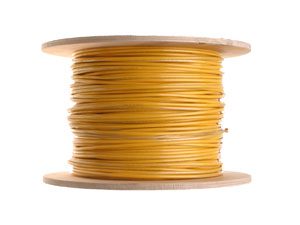
Tuff Cable is a 10-gauge coated copper low-voltage heating cable manufactured by Heatizon Systems — and one of only two products in the world listed under UL Standard 1588 for snow and ice melting installed under roofing materials. Chemical and gasoline resistant, hot-pour asphalt rated, and cut-to-length in the field, Tuff Cable is used across three distinct applications: exterior snow melting in concrete and asphalt, under-roof deicing for metal and non-metal roofs, and radiant floor and space heating. Every system is custom-designed to ASHRAE standards by Heatizon’s design team before materials are ordered.
Snow melting — concrete, asphalt, and pavers
Tuff Cable is the workhorse of electric driveway and walkway snow melting. Embedded in concrete, asphalt, mortar under pavers, or stone, it delivers consistent, even heat across the surface — eliminating snow accumulation and the need for salt, shoveling, or plowing. Systems are custom-designed to ASHRAE standards based on the project’s geographic location, surface area, and local snowfall data.
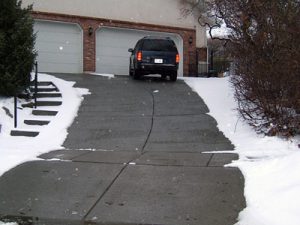
One feature that sets Tuff Cable apart in concrete and asphalt applications is the Joint Jumper Kit — a Tuff Cable-exclusive accessory that allows the heating element to safely bypass expansion joints and control joints without interruption. Running a heating cable directly through a concrete joint creates a stress point where slab movement can sever the element. The Joint Jumper Kit routes Tuff Cable through a cold lead beneath each joint and reconnects on the other side, allowing the concrete to move and settle without ever putting mechanical stress on the cable. This makes Tuff Cable the only snow melting cable reliably installable across multi-section slabs, stairways, and driveways with multiple expansion joints.
Tuff Cable is also the only low-voltage heating cable rated for hot-pour asphalt installation. Its 10-gauge coated copper construction and chemical resistance allow it to withstand the temperatures and composition of freshly poured asphalt — making it the only practical low-voltage option for new asphalt driveway snow melting. In a two-pour asphalt installation, Tuff Cable is laid on the compacted binder coat and the final asphalt surface is applied directly over it.
Tuff Cable can also be retrofit into existing concrete or asphalt via saw-cut channels — delivering performance equivalent to a new-pour installation without the cost of full removal. Compatible surfaces include concrete, asphalt, pavers, stone, and overlay systems.
See Heatizon’s full driveway and surface snow melting systems for every surface type and installation scenario.
Roof deicing — metal, membrane, and all roof types
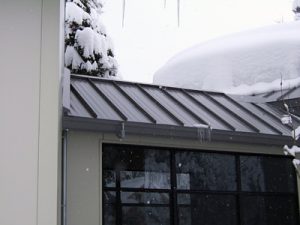
Tuff Cable is the only listed heating element for under-roof deicing across all roofing types — including metal roofing, membrane roofs, valley metal, flashing, and metal drip edges. Installed in Heatizon’s patented Invizimelt Panel, Tuff Cable is fully concealed beneath the finished roof surface, delivering heat upward through the panel to melt snow and ice at the roofline before ice dams can form.
This under-roof listing — ETL certified to UL Standard 1588 and compliant with NEC Article 426 — is what makes Tuff Cable the only product architects and contractors can specify for under-metal-roof deicing in permitted US and Canadian construction. The Invizimelt Panel’s aluminum construction provides rapid, efficient heat transfer, and the modular panel format fits varying roof pitches, eave widths, and valley geometries.
For non-metal roofs — asphalt shingles, wood shake, tile, and membranes — ZMesh is the recommended alternative where no heatsink embed is required. For metal roofing, valley metal, or any conductive surface, Tuff Cable in Invizimelt is the only listed option.
See Heatizon’s metal roof deicing systems for full application detail, installation examples, and Invizimelt Panel specifications.
Visit Heatizon’s complete roof deicing applications for information about our other products.
Radiant floor and space heating
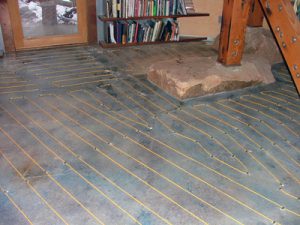
Tuff Cable delivers even, comfortable radiant warmth under virtually all floor coverings where a heatsink material is present in the floor assembly — including hardwood, carpet, tile, laminate, engineered wood, linoleum, and vinyl. The cable is embedded in a mortar bed, concrete slab, or self-leveling compound, which stores and distributes the heat evenly across the floor surface above.
Tuff Cable floor systems can be configured for supplemental floor warming — where a furnace or boiler provides the primary heat and Tuff Cable adds comfort — or for total space heating, where the radiant floor system provides all heat for the space. Total space heating requires closer run spacing and higher wattage, which Heatizon’s design team calculates based on room dimensions, insulation levels, heat loss, and climate data.
For floor heating applications where a mortar bed or heatsink is not part of the floor assembly, ZMesh is the recommended alternative — it lays directly beneath floor coverings without any embed and adds negligible height to the floor assembly.
See Heatizon’s floor and space heating pages for more information about our other heating products.
Technical specifications
| Conductor | 10-gauge coated copper |
| Voltage type | Low voltage |
| Supply voltage | 120V, 208V, 240V, or 277V AC |
| Operating voltage | 65 volts or less at the cable via step-down transformer |
| Heat output | 5 to 12 watts per lineal foot (dependent on run spacing) |
| Chemical resistance | Chemical and gasoline resistant — rated for hot-pour asphalt |
| Cable markings | Footage marks printed on cable for installation verification |
| Sizing | Cut-to-length in field |
| Heatsink required | Yes — concrete, asphalt, mortar, stone, pavers, or Invizimelt Panel |
| Joint protection | Joint Jumper Kit — bypasses expansion and control joints (snow melting) |
| Retrofit method | Saw-cut into existing concrete or asphalt (snow melting) |
| Safety listing | ETL listed to UL Standard 1588 and CSA standards — NRTL certified, US and Canada |
| NEC compliance | NEC Article 426 — under-roof and enclosed panel applications |
Complete the system
For roof deicing, Tuff Cable works inside Heatizon’s Invizimelt Panel — the patented aluminum heatsink system for metal and membrane roofs. For non-metal roof applications on the same building, ZMesh provides a listed under-shingle alternative without a heatsink embed.
For driveways and walkways, pair Tuff Cable snow melting with GutterMelt to keep gutters and downspouts clear — meltwater from the surface system needs a clear path off the building. For exterior snow melting on larger commercial surfaces where line-voltage is preferred, Hott-Wire is Heatizon’s mineral-insulated line-voltage alternative.
Why specify Tuff Cable
Tuff Cable is ETL listed by Intertek — an OSHA-recognized Nationally Recognized Testing Laboratory — to UL Standard 1588 and CSA standards. UL Standard 1588 covers Snow Melting and De-Icing Equipment, and achieving listing under this standard for under-roof installation required demonstrating that Tuff Cable performs safely and reliably when permanently enclosed beneath roofing materials. Together with ZMesh, Tuff Cable is one of only two products in the world to hold this authorization — making Heatizon’s under-roof systems the only products compliant with NEC Article 426 for under-roof and enclosed panel heating applications in the United States and Canada.
Tuff Cable’s 25-year manufacturer warranty is 2.5 times the length of the standard offered by the category’s nearest competitors, which typically carry 10-year warranties. The warranty is backed by the cable’s 10-gauge coated copper construction, chemical and gasoline resistance, low-voltage design that reduces insulation stress over time, and footage marks that allow every installation to be verified and documented. Heatizon has manufactured Tuff Cable in the United States since the company was founded — distributors have documented installations that remain fully operational decades after original commissioning.
Every Tuff Cable system is custom-designed to ASHRAE standards by Heatizon’s engineering team before materials are ordered. Heating load, run spacing, transformer sizing, and Joint Jumper Kit placement are all calculated and specified as part of the standard design-assist service included with every system — backed by unlimited technical support after commissioning.
ETL listed to UL Standard 1588 and CSA standards
ETL listing by Intertek carries the same legal standing as a UL listing for product compliance across the United States and Canada. Tuff Cable is ETL listed to UL Standard 1588 — Snow Melting and De-Icing Equipment — and to CSA standards, covering both US and Canadian code requirements for electric snow and ice melting systems. This listing applies to Tuff Cable across its snow melting, roof deicing, and floor heating applications.
UL Standard 1588 is the governing standard for electric snow melting, de-icing, and pipe heating equipment. The under-roof authorization within this listing — allowing Tuff Cable to be permanently installed beneath roofing materials — is held by only Heatizon’s products. No other manufacturer’s heating cable has passed the testing required to achieve this authorization. The ETL listing file is available on request from Heatizon for verification by engineers, inspectors, and code officials.
Tuff Cable is ETL listed to UL Standard 1588 and CSA standards — independently tested and certified by an OSHA-recognized NRTL.
The only low-voltage cable for hot-pour asphalt
Tuff Cable is the only low-voltage electric heating cable engineered and rated for installation in hot-pour asphalt. Conventional low-voltage heating cables use polymer jackets that cannot withstand the temperatures and chemical composition of freshly poured asphalt. Tuff Cable’s 10-gauge coated copper construction and chemical and gasoline resistance make it the only practical low-voltage option for new asphalt driveway, walkway, ramp, and parking area snow melting where the asphalt is laid directly over the cable in a single or two-pour operation.
This is an engineering characteristic of the cable’s construction — not a marketing claim. Specifiers and contractors can request the technical data sheet from Heatizon confirming the cable’s chemical and temperature resistance parameters before specifying.
Built by Heatizon — US manufacturer since 1979
Heatizon Systems has designed and manufactured electric radiant heating products in the United States since 1979. All of Heatizon’s products are listed or certified to UL and CSA standards and carry the ETL mark — a requirement Heatizon applies across its full product line, not just its flagship products. Every Tuff Cable system ships with heating load calculations, and transformer sizing prepared by Heatizon’s engineering team as part of the standard design-assist service. Heatizon also provides unlimited technical support after commissioning — no time limit on support calls for installed systems.
Heatizon’s product line covers every radiant heating and snow melting application: under-roof deicing, exterior snow melting in concrete and asphalt, pedestal paver snow melting, gutter and downspout deicing, radiant floor heating, and pipe freeze protection. For projects requiring a full building envelope solution, Heatizon can specify and supply every element from a single listed source.
Frequently Asked Questions
Invizimelt with Tuff Cable Roof Deicing
For non-conductive roofing materials — asphalt shingles, wood shake, tile, and most membranes — ZMesh is the recommended alternative. ZMesh lays directly under the shingles without any panel system, is approximately 1/16 inch thick, can be nailed and stapled through, and carries the same UL 1588 listing and 25-year warranty as the Tuff Cable in Invizimelt. Invizimelt with Tuff Cable is the correct choice for metal roofing, valley metal, flashing, and conductive surfaces where ZMesh cannot be used.
The Tuff Cable heating element within every Invizimelt system carries Heatizon’s industry-leading 25-year manufacturer warranty — 2.5 times the length of the standard 10-year warranty offered by competing heating cable products. The Invizimelt aluminum panels are a solid-state component with no wear parts and no expected service life limitation under normal installation conditions. Heatizon provides full technical support after commissioning with no time limit.
Yes. The Invizimelt system, using Tuff Cable as the heating element, is ETL listed to UL Standard 1588 and CSA standards — making it the only listed system available for under-roof snow and ice melting in the United States and Canada. This listing makes the Invizimelt system the only under-roof deicing product fully compliant with NEC Article 426 for enclosed panel heating applications. For permitted construction projects requiring a code-compliant under-roof deicing system, Invizimelt with Tuff Cable is the only listed option on the market.
Yes. The Invizimelt system — panels, Tuff Cable heating element, and control unit — contains no moving parts. The only mechanical action in the system is the automatic activator, which has no moving parts either, detecting snow and ice conditions electronically. A solid-state system with no moving parts has no wear components that require scheduled maintenance or replacement over the life of the installation.
Once Tuff Cable is snapped into the Invizimelt panel channels, aluminum tape is applied over the cable and panel surface. Aluminum’s high thermal conductivity means heat from the cable spreads rapidly and evenly across the full panel face, with no heat lost downward into the sub-roof below. The result is that essentially 100% of the electrical energy consumed by the Tuff Cable is converted to useful heat at the panel surface — making Invizimelt one of the most energy-efficient under-roof heating configurations available.
Invizimelt panels have a finished installed height of ¼ inch. This low profile means metal roofing panels, membrane, and other roof coverings lay completely flat over the Invizimelt system with no visible ridges or bumps in the finished roof. The ¼ inch height also provides ample surface for nailing and screwing metal roof panels — installers do not need to work around fastener locations when installing the roofing material over the panels.
Yes. The Invizimelt panel system is modular — panels come in different sizes and configurations that can be assembled to cover eaves, valleys, crickets, dormers, and other non-standard roof features. The modular format allows the system to be customized to any roof pitch or layout without cutting or fabricating custom components on site.
A complete Invizimelt system includes the aluminum panels in the sizes required for the project, Tuff Cable low-voltage heating element cut to length, aluminum tape for panel coverage, a control unit with monitoring functions, automatic snow and ice detection activator, and project specifications. Custom installation layout drawings from Heatizon’s design team are also available for some projects. The step-down transformer is sized and specified as part of the system design. Heatizon provides full project design assistance and technical support as part of every system.
The Invizimelt system is designed to heat from the drip edge up to the point where interior building heat is already warming the roof from below — the zone where snow naturally melts on its own. This design eliminates cold spots between the heated eave zone and the warm upper roof, preventing meltwater from refreezing mid-roof before it can drain. Unlike cable-on-roof systems that only heat a narrow strip at the eave, Invizimelt provides continuous coverage across the full ice dam risk zone. Heatizon’s design team specifies the exact panel coverage area based on roof geometry, insulation values, and local snowfall data.
Yes. Invizimelt can be retrofitted to existing roofs in two ways: panels can be installed over the roof edge shingle, sitting on top of the existing roofing at the eave line, or they can be installed under the roof edge shingle by lifting and relaying the lower courses of roofing material. The over-shingle retrofit method requires no shingle removal and is the faster installation — the panels are visible at the eave but concealed once any fascia or trim is in place. Both methods result in a fully functional, listed deicing system without a full re-roof.
On new construction, Invizimelt panels are attached to the roof deck along eaves, valleys, crickets, dormers, and other ice dam-prone areas. Tuff Cable is snapped into the panel channels and covered with aluminum tape, which directs 100% of the heat upward through the panel. Ice/Water shield is applied over the Invizimelt system, the Tuff Cable is marked, to ensure it is not punctured. Finally, the roofing material — metal, membrane, or other covering — is then installed directly over the panels. At ¼ inch finished height, the panels create no visible ridges or bumps in the finished roof surface, and provide ample nailing and fastening surface for the roofing contractor.
Yes. Invizimelt panels can be installed under deck surfaces as well as roofing materials — particularly where a solid subfloor is being used and the deck surface is stone, or some other continuous material needing a snow/ice melting system.
For snow melting systems for decks that installs on joists, please see our Deck Pan Heating System.
Invizimelt is compatible with all roofing materials — including standing seam metal roofing, corrugated metal, membrane roofing, slate, asphalt shingles, and composite shingles. It is the only listed system approved for installation under metal roofing surfaces. For non-metal shingle applications such as asphalt or wood shake where no panel system is needed, ZMesh is the recommended alternative — it lays directly under shingles without any panel or heatsink.
Aluminum transfers heat significantly faster than cementitious materials such as concrete or mortar. When Tuff Cable is covered with aluminum tape inside the Invizimelt panel, 100% of the cable’s heat output is directed upward into the panel surface — none is lost downward into the substrate below. A cementitious heatsink absorbs and stores heat more slowly and loses some of it downward into the sub-roof. Invizimelt’s aluminum construction means the system reaches operating temperature faster, responds more quickly to changing weather conditions, and uses energy more efficiently.
Invizimelt is Heatizon’s patented aluminum panel system for under-roof and under-deck deicing. Tuff Cable low-voltage heating cable snaps directly into the aluminum panels, which are then installed beneath the roofing or decking material — completely concealed from view. The aluminum panels act as a heatsink, rapidly distributing heat from the cable across the full panel surface and up through the roofing material above, melting snow and ice from the eaves, valleys, and roof edge before ice dams can form. Invizimelt is for exclusive use with Heatizon’s Tuff Cable.
Tuff Cable installed in Invizimelt Panels is compatible with all roofing materials — including metal roofing, non-metal shingles (asphalt, composite, wood shake, tile), membranes, valley metal, flashing, and metal drip edges. This makes Tuff Cable the more versatile of Heatizon’s two under-roof heating elements: where ZMesh is limited to non-conductive materials, Tuff Cable embedded in a heatsink works under any roof covering.
Invizimelt is Heatizon’s patented aluminum panel system designed for under-roof deicing. Tuff Cable snaps into the Invizimelt Panel channels, which then act as a heatsink — distributing heat evenly across the panel surface and up through the roofing material above. The aluminum construction provides rapid, efficient heat transfer compared to cementitious heatsink materials. Invizimelt Panels are modular, available in different sizes to fit varying roof pitches and valleys, and can be installed on new construction or retrofitted over the roof edge on existing roofs.
Yes. Tuff Cable, installed in Heatizon’s Invizimelt Panel, is the only listed system for snow and ice melting under metal roofing, valley metal, flashing, and metal drip edges. This under-metal-roof listing is covered under UL Standard 1588 and ETL certified — the same standard that makes Heatizon’s products the only under-roof systems compliant with NEC Article 426. Tuff Cable must always be fully embedded in the Invizimelt Panel for metal roof applications — it cannot be laid directly against metal roofing surfaces without a heatsink material.
Yes. Tuff Cable is the only low-voltage heating cable designed to withstand hot-pour asphalt installation. Its 10-gauge coated copper construction and chemical resistance allow it to survive the temperatures and chemical composition of freshly poured asphalt — making it the only practical low-voltage option for new asphalt driveway and roadway snow melting applications. In a two-pour asphalt installation, Tuff Cable is laid on the binder or base coat layer, and the final asphalt surface layer is poured directly over it.
Yes. Tuff Cable is listed by Intertek (ETL) — an OSHA-recognized Nationally Recognized Testing Laboratory — to UL and CSA standards for snow and ice melting on surfaces and roofs, and for interior floor heating applications. Together with ZMesh, Tuff Cable is one of only two products in the world authorized under UL Standard 1588 for snow and ice melting installed under roofing materials. All Heatizon systems are designed to ASHRAE standards for heating load calculation and energy efficiency.
Tuff Cable and ZMesh are both Heatizon low-voltage heating elements and both are ETL listed under UL Standard 1588 for under-roof snow melting — but they are designed for different installation methods. Tuff Cable is a round copper cable that must always be embedded in a heatsink material (concrete, asphalt, mortar, Invizimelt panel). ZMesh is a flat bronze mesh that lays directly beneath flooring or roofing without any embed. Tuff Cable is the right choice where a heatsink is present or required — driveways, metal roofs, floor overlays. ZMesh is the right choice where no embed is possible or desired — under non-metal shingles, hardwood floors, and carpet.
Tuff Cable carries an industry-leading 25-year manufacturer’s warranty — the longest available for any electric radiant heating cable in its category. The warranty reflects the cable’s construction: 10-gauge coated copper heating cable that gets embedded in a protective heatsink, with footage marks for verifiable installation, and a low-voltage design that reduces electrical stress on the insulation over time. Heatizon has documented installations from decades ago that remain fully operational.
Tuff Cable is a low-voltage system powered by a step-down transformer that reduces the supply voltage — typically 120V, 208V, 240V, or 277V AC — to 65 volts or less at the cable. This low operating voltage is one of Tuff Cable’s key safety advantages over line-voltage systems, and it also allows the cable to be cut and spliced in the field, and to be installed in surfaces where line-voltage systems are not permitted or practical.
Tuff Cable Electric Floor-Space Heating
Yes — unlike ZMesh, Tuff Cable must always be embedded in a heatsink material. For floor heating, this is typically a mortar bed, concrete slab, or self-leveling cementitious compound. The heatsink stores and distributes the heat from the cable evenly across the floor surface. This requirement adds some installation complexity compared to mesh-based systems, but results in excellent, even heat distribution and long cable life due to the protection the embed provides.
Yes. Tuff Cable floor systems can be designed for both supplemental floor warming — where the primary heat source is a furnace or boiler — and total space heating, where the radiant floor system provides all the heat for the space. Total space heating applications require higher wattage and closer run spacing than floor warming. Heatizon’s design team determines the correct configuration based on room dimensions, insulation levels, heat loss calculations (provided by the project’s engineer), and climate data.
Tuff Cable is compatible with almost all floor coverings where a heatsink material is present in the floor assembly — including hardwood, carpet, tile, laminate, engineered wood, linoleum, and vinyl. The heatsink is typically concrete, a mortar bed, or a self-leveling compound into which the Tuff Cable is embedded before the floor covering is installed. Unlike ZMesh, Tuff Cable requires this heatsink layer — it cannot be installed directly under flooring without an embed.
Yes. Tuff Cable is listed by Intertek (ETL) — an OSHA-recognized Nationally Recognized Testing Laboratory — to UL and CSA standards for snow and ice melting on surfaces and roofs, and for interior floor heating applications. Together with ZMesh, Tuff Cable is one of only two products in the world authorized under UL Standard 1588 for snow and ice melting installed under roofing materials. All Heatizon systems are designed to ASHRAE standards for heating load calculation and energy efficiency.
Tuff Cable and ZMesh are both Heatizon low-voltage heating elements and both are ETL listed under UL Standard 1588 for under-roof snow melting — but they are designed for different installation methods. Tuff Cable is a round copper cable that must always be embedded in a heatsink material (concrete, asphalt, mortar, Invizimelt panel). ZMesh is a flat bronze mesh that lays directly beneath flooring or roofing without any embed. Tuff Cable is the right choice where a heatsink is present or required — driveways, metal roofs, floor overlays. ZMesh is the right choice where no embed is possible or desired — under non-metal shingles, hardwood floors, and carpet.
Tuff Cable carries an industry-leading 25-year manufacturer’s warranty — the longest available for any electric radiant heating cable in its category. The warranty reflects the cable’s construction: 10-gauge coated copper heating cable that gets embedded in a protective heatsink, with footage marks for verifiable installation, and a low-voltage design that reduces electrical stress on the insulation over time. Heatizon has documented installations from decades ago that remain fully operational.
Tuff Cable is a low-voltage system powered by a step-down transformer that reduces the supply voltage — typically 120V, 208V, 240V, or 277V AC — to 65 volts or less at the cable. This low operating voltage is one of Tuff Cable’s key safety advantages over line-voltage systems, and it also allows the cable to be cut and spliced in the field, and to be installed in surfaces where line-voltage systems are not permitted or practical.
Tuff Cable is a low-voltage electric radiant heating cable made from a specially-engineered copper heating wire (approximately 10-gauge), manufactured by Heatizon Systems. It is chemical and gasoline resistant, comes with footage marks printed along the cable for easy layout verification, and is designed to always be embedded in a heatsink material — such as concrete, asphalt, mortar, stone, pavers, or Heatizon’s Invizimelt Panel. Tuff Cable is a cut-to-length product, giving installers precise control over system sizing without material waste.
Tuff Cable Snow Melting
All Tuff Cable snow melting systems are custom-designed to ASHRAE standards, taking into account the project’s geographic location, local snowfall data, surface area, and slab type. Heatizon’s design team calculates the required wattage, run spacing, and transformer sizing for each project. This design service is included with every Tuff Cable system and is provided before materials are ordered. Layout drawings can be provided for special circumstances and/or large/specified projects.
Tuff Cable is suitable for snow melting in concrete, asphalt, mortar beds under pavers or stone, and overlay systems over existing surfaces. It is used for driveways, walkways, entryways, parking areas, loading docks, stairs, and ramps — both residential and commercial. It can also be installed under pavers in a sand or mortar bed, and can be retrofitted into existing concrete or asphalt via saw cut.
Yes. Tuff Cable can be retrofit into existing concrete and asphalt surfaces using a saw-cut method. Channels are cut into the existing surface, Tuff Cable is laid into the channels, covered with a backer rod, and the surface is patched with a compatible overlay material and/or a sealant. This retrofit approach delivers performance equivalent to a new-pour installation at a fraction of the cost and disruption of full removal and replacement. Heatizon’s design team provides retrofit layouts and specifications as part of the standard project design service.
The Joint Jumper Kit is a Tuff Cable-exclusive accessory that allows the heating element to safely bypass expansion joints and control joints in concrete installations. Without it, running a heating cable directly through a concrete joint creates a stress point where cracking or movement in the slab can damage or sever the cable. The Joint Jumper Kit connects the Tuff Cable to a cold lead that passes under the joint, then reconnects to the Tuff Cable on the other side — allowing the concrete to move and shift without putting mechanical stress on the heating element. This makes Tuff Cable the only snow melting cable that can be reliably installed across multi-section concrete slabs, stairways, and driveways with multiple expansion joints.
Yes. Tuff Cable is the only low-voltage heating cable designed to withstand hot-pour asphalt installation. Its 10-gauge coated copper construction and chemical resistance allow it to survive the temperatures and chemical composition of freshly poured asphalt — making it the only practical low-voltage option for new asphalt driveway and roadway snow melting applications. In a two-pour asphalt installation, Tuff Cable is laid on the binder or base coat layer, and the final asphalt surface layer is poured directly over it.
Yes. Tuff Cable is listed by Intertek (ETL) — an OSHA-recognized Nationally Recognized Testing Laboratory — to UL and CSA standards for snow and ice melting on surfaces and roofs, and for interior floor heating applications. Together with ZMesh, Tuff Cable is one of only two products in the world authorized under UL Standard 1588 for snow and ice melting installed under roofing materials. All Heatizon systems are designed to ASHRAE standards for heating load calculation and energy efficiency.
Tuff Cable and ZMesh are both Heatizon low-voltage heating elements and both are ETL listed under UL Standard 1588 for under-roof snow melting — but they are designed for different installation methods. Tuff Cable is a round copper cable that must always be embedded in a heatsink material (concrete, asphalt, mortar, Invizimelt panel). ZMesh is a flat bronze mesh that lays directly beneath flooring or roofing without any embed. Tuff Cable is the right choice where a heatsink is present or required — driveways, metal roofs, floor overlays. ZMesh is the right choice where no embed is possible or desired — under non-metal shingles, hardwood floors, and carpet.
Tuff Cable carries an industry-leading 25-year manufacturer’s warranty — the longest available for any electric radiant heating cable in its category. The warranty reflects the cable’s construction: 10-gauge coated copper heating cable that gets embedded in a protective heatsink, with footage marks for verifiable installation, and a low-voltage design that reduces electrical stress on the insulation over time. Heatizon has documented installations from decades ago that remain fully operational.
Tuff Cable is a low-voltage system powered by a step-down transformer that reduces the supply voltage — typically 120V, 208V, 240V, or 277V AC — to 65 volts or less at the cable. This low operating voltage is one of Tuff Cable’s key safety advantages over line-voltage systems, and it also allows the cable to be cut and spliced in the field, and to be installed in surfaces where line-voltage systems are not permitted or practical.
Tuff Cable is a low-voltage electric radiant heating cable made from a specially-engineered copper heating wire (approximately 10-gauge), manufactured by Heatizon Systems. It is chemical and gasoline resistant, comes with footage marks printed along the cable for easy layout verification, and is designed to always be embedded in a heatsink material — such as concrete, asphalt, mortar, stone, pavers, or Heatizon’s Invizimelt Panel. Tuff Cable is a cut-to-length product, giving installers precise control over system sizing without material waste.
