UL 1588 listed for under-shingle roof deicing and radiant floor heating — woven bronze mesh, nailable, stapleable, 25-year warranty.
ZMesh is a woven bright bronze mesh heating element made in the United States — the only electric radiant heating element listed under UL Standard 1588 for installation under roofing materials in the US and Canada. In use since 1979, ZMesh serves two distinct applications: under-shingle roof deicing and ice dam prevention, and radiant floor and space heating under virtually any floor covering. Both applications use the same element; the installation method and wattage configuration differ by use case.
Roof deicing and ice dam prevention
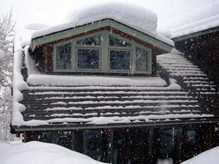
Ice dams form when heat escapes through a roof, melts snow near the ridge, and the meltwater refreezes at the cold eaves — backing up under shingles and into the building envelope. The only lasting solution is to heat the eaves and valleys where ice dams form, before they start.
ZMesh is installed directly on the sub-roof deck beneath the shingles, laying flat at approximately 1/16 inch thick. Because it can be nailed and stapled through without damage, standard roofing installation techniques proceed unmodified over the top of it. Once covered, ZMesh is completely invisible — the finished roof looks and performs exactly as it would without the system installed.
ZMesh is compatible with all non-conductive roofing materials: asphalt shingles, composite shingles, wood shake, fiberglass shingles, slate, tile, and membrane roof coverings. It should not be installed under or over metal roofing, valley metal, or metal flashing — for metal roof deicing, see Invizimelt with Tuff Cable.
ZMesh roof deicing systems include an automatic snow and moisture detection activator that triggers the system when the temperature drops below 38°F and moisture is present — no manual switching required (but can be added). The system can also be retrofit into an existing roof by removing and relaying shingles along eaves and valleys, making it well suited to planned re-roofing projects.
See Heatizon’s full roof deicing and ice dam prevention systems for every roof type and application.
Radiant floor and space heating
For floor and space heating, ZMesh is installed directly on the subfloor beneath the finished flooring — no mortar bed, no heatsink embedment, no structural modifications. At 1/16 inch thick, it adds negligible height to the floor assembly compared to heating cables that require a 1–2 inch cementitious embed. This makes ZMesh one of the most practical radiant floor heating solutions available for both new construction and retrofit installations.
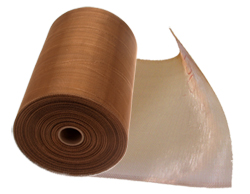
ZMesh is compatible with virtually all non-conductive floor coverings, including hardwood, engineered wood, tile, stone, carpet, linoleum, and vinyl. Flooring installers can nail hardwood and tack carpet directly through the mesh using standard installation techniques. For hardwood applications, allow the flooring to acclimate to the room’s humidity for several weeks before installation, and run the system before nailing or stapling the hardwood to the subfloor.
ZMesh can also be retrofitted from below — installed between floor joists from an unfinished basement or crawlspace — without disturbing the finished floor above. This is one of the only radiant heating elements that offers this installation path, making it a uniquely practical option for existing homes.
See at all of Heatizon’s floor and space heating systems for several other products.
Technical specifications
| Material | Woven bright bronze metal fabric — recyclable |
| Available widths | 9 inches or 12 inches |
| Available lengths | 50 ft to 400 ft (cut to length in field) |
| Thickness | Approximately 1/16 inch |
| Heat output | 5 to 12 watts per lineal foot (dependent on run spacing) |
| Roof watt density | Up to 13 watts per sq ft (9″ width, close spacing) |
| Voltage | Low voltage output (120V, 208V, 240V or 277V input) |
| Safety listing | ETL listed to UL Standard 1588 and CSA standards — NRTL certified, US and Canada |
| NEC compliance | NEC Article 426 — under-roof and enclosed panel applications |
| Warranty | 25 years (manufacturer) |
| Activation | Automatic snow/moisture sensor (38°F trigger); manual timer and temperature-only sensor also available |
| Repairability | Field-repairable with copper splice plate and solder |
| Country of origin | United States of America |
Why specify ZMesh
ZMesh holds a distinction no competing product can honestly claim: it is the only electric radiant heating element in the world listed under UL Standard 1588 for snow and ice melting installed under roofing materials. This ETL listing — covering both UL and CSA standards, recognized by OSHA as a Nationally Recognized Testing Laboratory certification — makes ZMesh the only under-shingle roof deicing product fully compliant with NEC Article 426 for under-roof and enclosed panel heating applications in the United States and Canada. Architects, engineers, and contractors specifying under-roof heating for permitted construction have one listed option: Heatizon.
ZMesh is also field-repairable — a distinction no other radiant heating manufacturer can match. If ZMesh is cut, nicked, or damaged during a future renovation, it can be repaired on site using a copper splice plate and solder. Every other listed radiant heating cable on the market is a fixed-length, non-repairable element: damage means full replacement. ZMesh’s bronze mesh construction makes repair straightforward and permanent.
Heatizon has manufactured ZMesh in the United States since 1979. The ZMesh trademark was first used in commerce in 1998 and has been a registered US trademark since 2006. Heatizon distributors have documented installations from decades ago that remain fully operational. The 25-year manufacturer warranty is backed by this track record — not just a policy document.
Specifier notice: Heatizon is aware of competing under-shingle heating products sold without an ETL or UL listing under UL Standard 1588. Installing an unlisted product under roofing materials creates a code compliance gap under NEC Article 426 and may void the roofing warranty. ZMesh is the only product in this category that has completed the full UL 1588 listing process for under-roof installation. When in doubt, request the ETL listing file from any supplier before specifying.
ETL listed to UL 1588 and CSA standards
ETL listing by Intertek — an OSHA-recognized Nationally Recognized Testing Laboratory — carries the same legal weight as a UL listing for product compliance in the United States and Canada. ZMesh is ETL listed to UL Standard 1588 (Snow Melting Equipment) and CSA standards, covering both US and Canadian code requirements for electric snow and ice melting systems.
UL Standard 1588 governs electric snow melting, de-icing, and pipe heating equipment. Achieving authorization under this standard for under-roof installation required demonstrating that ZMesh performs safely and reliably when permanently enclosed beneath roofing materials — a test environment no competing product has passed. The ETL listing file is available on request from Heatizon for verification by engineers and code officials.
ZMesh is ETL listed to UL and CSA standards — independently tested and certified by an OSHA-recognized NRTL.
Complete the system
For full roof protection, ZMesh pairs with GutterMelt to keep gutters and downspouts clear of ice — meltwater from the ZMesh system needs a clear drainage path all the way off the roof. For metal roof areas on the same building, Invizimelt with Tuff Cable handles what ZMesh cannot.
For floor heating projects where a higher watt density is needed than ZMesh provides, Hott-Wire mineral-insulated cable is Heatizon’s line-voltage alternative.
Built by Heatizon — US manufacturer since 1979
Heatizon Systems has designed and manufactured electric radiant heating products in the United States since 1979. Every ZMesh system ships with custom project layout drawings prepared by Heatizon’s design team — heating load calculations, run spacing, and wattage tailored to the specific dimensions and climate of the project. This design-assist service is included with every system and backed by full project support through installation and commissioning.
Heatizon’s product line covers every radiant heating and snow melting application: under-shingle and under-membrane roof deicing, pedestal paver snow melting, driveway and walkway snow melting, gutter and downspout deicing, radiant floor heating, and pipe freeze protection. For projects requiring a complete building envelope solution, Heatizon can specify and supply every element from a single source.
Tell us about your project/get more information:
Fill out the form to the right, include as much information about your project as possible and we will get back to you with more information.
Frequently Asked Questions – Roof Deicing
ZMesh Electric Roof Deicing
ZMesh is a cut-to-length product, unlike most UL-listed radiant heating cables which are fixed-length. This gives installers flexibility to size each run precisely to the space — eliminating the waste and design constraints of fixed-length systems. ZMesh is available in rolls from 50 to 400 feet and can be cut on site to the exact length required by the project layout.
Yes. ZMesh is one of the only radiant heating elements on the market that can be repaired in the field if cut or damaged. Repair requires a customized copper splice plate and solder — a straightforward process compared to the full element replacement required by most competing fixed-length heating cables. This repairability is a meaningful long-term advantage, particularly for installations that may be subject to renovation or remodeling work years after the original installation.
Yes — provided the nail, screw, or staple does not make contact with any other electrically conductive material. ZMesh can be nailed and stapled through freely during roofing and flooring installation, which is one of its key practical advantages over conventional heating cables. This eliminates the need to plan fastener locations around the heating element and allows standard roofing and flooring installation techniques to proceed unmodified.
ZMesh roof deicing systems can be activated automatically using an aerial-mounted snow and moisture sensor that triggers the system when the temperature drops below 38°F and moisture is detected. Additional activation options include a gutter-mounted switch, a temperature-only sensor, a 12-hour manual timer, WIFI-controlled, and weather-predicting activation (coming soon). Automatic activation is strongly recommended — it ensures the system activates before ice begins to form, which is more effective and energy-efficient than reactive manual operation.
Yes, with roofing contractor involvement. Installing ZMesh in an existing roof requires removing shingles along the eaves and up valleys where ice dams typically form, laying ZMesh on the sub-roof with a layer of ice-and-water shield over the top, then relaying the shingles. While this involves labor, it is less disruptive than a full re-roof and results in a permanent, invisible system. ZMesh is particularly well suited to installation during planned re-roofing projects, eliminating the need for future disruption.
ZMesh is compatible with all non-conductive roofing materials, including asphalt shingles, composite shingles, wood shake, fiberglass shingles, slate, tile, and membrane roof coverings. Before specifying ZMesh under a membrane, confirm that neither the membrane material nor its adhesive will be adversely affected by the bronze alloy — Heatizon’s design team can advise on compatibility for specific membrane products.
No. ZMesh is a bronze mesh element and must not be installed under or over metal roofing materials, valley metal, metal flashing, or other electrically conductive surfaces, as contact with metal can cause a short circuit. For metal roof deicing applications, Heatizon recommends Tuff Cable installed in Heatizon’s patented Invizimelt panel system — which are specifically engineered and listed for under-metal-roof deicing.
ZMesh carries an industry-leading 25-year manufacturer’s warranty. The long warranty is backed by the product’s construction: because ZMesh is installed under roofing or flooring rather than exposed to the elements, it is protected from UV damage, physical impact, and weathering. Heatizon’s distributors have documented ZMesh installations from decades ago that remain fully operational and visually unchanged. In most installations, ZMesh will outlast the roofing or flooring material installed above it.
Yes. ZMesh (along with Heatizon’s Tuff Cable) is the only product authorized under UL Standard 1588 and ETL listed in the United States and Canada for snow and ice melting installed under roofing materials. This makes Heatizon’s under-roof systems the only products compliant with NEC Article 426 for under-roof and enclosed panel heating applications. No other manufacturer’s under-shingle heating product holds this listing.
The width choice affects heat output, not coverage area. The 9-inch mesh allows more runs to be placed in a given space, resulting in higher watts per square foot — up to 13 watts per square foot — making it the recommended choice for roof deicing where aggressive snow and ice melting is needed. The 12-inch mesh produces a lower watt density, which is better suited for radiant floor heating where even, gentle warmth is the goal. Heatizon’s design team specifies the appropriate width for each project based on application and local climate.
ZMesh serves two distinct applications: under-shingle roof deicing and ice dam prevention, and radiant floor and space heating. For roof applications, ZMesh is installed beneath non-conductive shingles, membranes, and wood decking to melt snow and ice from eaves and valleys. For floor applications, ZMesh is installed beneath virtually any non-conductive floor covering — including hardwood, tile, stone, carpet, engineered wood, linoleum, and vinyl — to provide even, comfortable radiant warmth. Both applications use the same physical element; the installation method and wattage configuration differ by use case.
ZMesh is a woven bright bronze metal mesh heating element manufactured by Heatizon Systems. It resembles screen door material in appearance and is approximately 1/16 inch thick, available in 9-inch and 12-inch widths and in lengths from 50 to 400 feet. The bronze construction is highly durable, fully recyclable, and designed to outlast the roofing or flooring installed above it. ZMesh has been in continuous production and use since 1979.
Frequently Asked Questions – Floor/Space Heating
ZMesh Electric Floor-Space Heating
ZMesh is a cut-to-length product, unlike most UL-listed radiant heating cables which are fixed-length. This gives installers flexibility to size each run precisely to the space — eliminating the waste and design constraints of fixed-length systems. ZMesh is available in rolls from 50 to 400 feet and can be cut on site to the exact length required by the project layout.
Yes. ZMesh is one of the only radiant heating elements on the market that can be repaired in the field if cut or damaged. Repair requires a customized copper splice plate and solder — a straightforward process compared to the full element replacement required by most competing fixed-length heating cables. This repairability is a meaningful long-term advantage, particularly for installations that may be subject to renovation or remodeling work years after the original installation.
Yes — provided the nail, screw, or staple does not make contact with any other electrically conductive material. ZMesh can be nailed and stapled through freely during roofing and flooring installation, which is one of its key practical advantages over conventional heating cables. This eliminates the need to plan fastener locations around the heating element and allows standard roofing and flooring installation techniques to proceed unmodified.
Yes. ZMesh can be retrofitted between floor joists from an unfinished basement or crawlspace below, without disturbing the finished floor above. This makes it one of the only radiant heating elements that can be added to an existing home without any flooring removal — a significant advantage for renovation projects where disruption and cost need to be minimized.
Yes. ZMesh is well suited to hardwood floor heating. The 12-inch width is the standard recommendation for hardwood applications. Before installation, allow the hardwood to acclimate to the room’s humidity level for several weeks to minimize dimensional changes after heating begins. After laying and connecting ZMesh, test and then run the system for before nailing or stapling the hardwood to the subfloor — this allows the wood to adjust to its heated operating temperature. As with all radiant floor heating under hardwood, confirm with the flooring manufacturer that surface temperatures will not exceed 85°F.
No. Unlike most radiant heating cables that must be embedded in a mortar or self-leveling compound to transfer heat, ZMesh is installed directly beneath the floor covering without any mortar bed or heatsink embedment. Because ZMesh is only 1/16 inch thick, it adds virtually no height to the floor assembly — eliminating the cost of a cementitious mud bed, the structural upgrades needed to support its weight, and the installation complexity it introduces. This makes ZMesh one of the most practical radiant floor heating solutions for both new construction and retrofit projects.
ZMesh carries an industry-leading 25-year manufacturer’s warranty. The long warranty is backed by the product’s construction: because ZMesh is installed under roofing or flooring rather than exposed to the elements, it is protected from UV damage, physical impact, and weathering. Heatizon’s distributors have documented ZMesh installations from decades ago that remain fully operational and visually unchanged. In most installations, ZMesh will outlast the roofing or flooring material installed above it.
The width choice affects heat output, not coverage area. The 9-inch mesh allows more runs to be placed in a given space, resulting in higher watts per square foot — up to 13 watts per square foot — making it the recommended choice for roof deicing where aggressive snow and ice melting is needed. The 12-inch mesh produces a lower watt density, which is better suited for radiant floor heating where even, gentle warmth is the goal. Heatizon’s design team specifies the appropriate width for each project based on application and local climate.
ZMesh serves two distinct applications: under-shingle roof deicing and ice dam prevention, and radiant floor and space heating. For roof applications, ZMesh is installed beneath non-conductive shingles, membranes, and wood decking to melt snow and ice from eaves and valleys. For floor applications, ZMesh is installed beneath virtually any non-conductive floor covering — including hardwood, tile, stone, carpet, engineered wood, linoleum, and vinyl — to provide even, comfortable radiant warmth. Both applications use the same physical element; the installation method and wattage configuration differ by use case.
ZMesh is a woven bright bronze metal mesh heating element manufactured by Heatizon Systems. It resembles screen door material in appearance and is approximately 1/16 inch thick, available in 9-inch and 12-inch widths and in lengths from 50 to 400 feet. The bronze construction is highly durable, fully recyclable, and designed to outlast the roofing or flooring installed above it. ZMesh has been in continuous production and use since 1979.
