Category : Blog

Heatizon Prides Customer Service for Our Radiant Heat Products

I received a telephone call this morning from a General Contractor located in the Northeastern portion of the United States. According to the Contractor he has successfully installed Heatizon Systems’ roof snow and ice melting, floor warming and snow melting products in several projects over the past few years. The purpose of his call was simply to thank me for the great technical support and customer service Heatizon Systems’ and its employees have extended to his company.

Obviously the call made me feel great and helped me remember that hard work and sincere effort is noticed, and appreciated, even though it is not always communicated. I am thankful that the Contractor took time out of his busy schedule to call me and, I am hopeful that I will become as thoughtful and generous with deserved praise to my business partners as he was with me.

Heatizon Systems has always had an objective of excellent customer service at the top of its list and we have tried our best to extend superb technical support and customer service to our customers. In other words, Heatizon Systems is committed to do it’s very best to make certain that its customers have a wonderful experience with its products and services both initially and for years to come. This commitment extends to all aspects of our business and motivates us to constantly make and market products and installation techniques that we are able to stand behind for many years to come.

Radiant Happiness – Meeting Customer Expectations

My company, and its predecessors, first started making electric radiant heating and snow melting products in 1979. Over the years many different products have come to market, some good and, others, well let’s just say, they don’t last long. Based on experience, I have come to appreciate that it takes more than just a great product for a snow melting or radiant floor heating project to be successful and serve the customers needs over the long run.

I have seen electric radiant heating projects that were installed as early as 1979 and 1980 that are still delivering the promised value proposition today. Most of these projects have performed year after year and never required a service call which is one of big advantages that electric radiant products have over their hydronic or hot water, boiler based, competitors.

On the other hand I have seen radiant projects, electric and hydronic, which were either not well designed and/or poorly installed. Let me assure you that unlike wine, port, or whiskey, poorly designed and/or mis installed radiant projects do not get better with age, unfortunately they get much worse.

Can you imagine owning a home with a heating system that almost keeps you comfortable? Or one with a driveway snow melting system that sometimes melts all of the snow and ice? How much good does a roof snow and ice melt system do if it is not properly designed to provide an exit path for the water created to escape the roof? If only part of the floor is warm how happy will you be with your floor warming system?

Obviously, a great product, professional design and quality installation are essential ingredients for long term happiness with, and success of, any radiant project. My experience shows that if a qualified electrical contractor, contractor or handy man is armed with a great product, well thought out design and adequate installation instructions and technical support the result will be a radiant product that will easily satisfy the most discriminating customer’s needs and desires.

The good news is that all three of these essential ingredients are available from qualified professionals working for established companies. I have been involved in the manufacturing, design and installation of radiant heating and snow melting projects since 1996 and without exception, happy customers are the result of great products, professional designs and quality installations.

Self Regulating Heat Trace Cables Comparison

The construction of high quality, commercial grade, Self Regulating Cables is basically the same until you get to the outer jacket or exterior insulator. In the middle of a 2 conductor Self Regulating Cable there are two conductors usually made of Copper and coated with something like Tin or Nickel. The two coated Copper conductors are surrounded by a semi-conductive heating matrix or Polymer which some call the “self regulating component”. The semi-conductive heating matrix or Polymer is covered by either a first adhesive inner jacket and then a Polyolefin jacket or just a Polyolefin jacket. In either case, the polyolefin jacket is surrounded by a metallic shield usually constructed of Tinned Copper which is covered by an outer jacket made of either Polyolefin, or Fluoropolymer (“Teflon” is DuPont’s brand name for Fluoropolymer).

Other than cost (Fluoropolymer is significantly higher than Polyolefin) the only significant difference between high quality, commercial grade, CR (Polyolefin) and CT (Fluoropolymer) Self Regulating Cables is the outer jacket. Knowing the difference between CR and CT, what they are designed to do and the applications for which they are suited can result in a great deal of savings because of the cost variation.

Companies specializing in Self Regulating Cables should be able to tell you which cable is best suited for your application and explain to you, in layman’s terms, the reasons the cable they recommend is best. However it is wise to trust, but verify, the information provided because sometimes even those that know better fail to effectively communicate. I have been surprised at the number of times I have seen a CT jacketed cable in a specification for snow melting in asphalt, concrete or under brick or stone pavers or for snow and ice melt on roofs and in rain gutters and downspouts when a CR jacketed cable would perform equally as well and cost substantially less.

In the world of Self Regulating Cables the CR (Polyolefin or sometimes called Modified Polyolefin) Outer Jacket is designed to be used where exposure to aqueous inorganic chemicals is anticipated and, the CT (Fluoropolymer) Outer Jacket is best suited for those applications where exposure to organic chemicals or corrosives is likely.

A very simplistic definition of organic compounds is those that contain carbon like the chemicals found in living organisms. Similarly, a simplistic definition of inorganic compounds is those from a mineral, and not a biological, origin that do not contain carbon. While there are a few exceptions to these simplistic definitions I think that they serve our needs for a discussion pertaining to Self Regulating Cables.

According to Wikipedia, “Aqueous” means dissolved in water and an “Aqueous Solution” means a solution in which the solvent is water. Examples of aqueous solutions include: soda, saltwater, rain, etc.

Summarizing, Self Regulating Cables which have a CR (Modified Polyolefin or Polyolefin) Outer Jacket are suitable for all applications where they may be exposed to Inorganic compounds (minerals such as Sodium, Ozone, Carbon Monoxide, etc. ) that are dissolved in water (Aqueous Inorganic Chemicals) as well as where they are exposed to oil and gasoline. Acceptable applications for CR Self Regulating Cables include roof snow and ice melting, rain gutter and downspout heating, snow melting off of asphalt, concrete and paver surfaces, warming of floors, heating of buildings, warming of pipes. and other applications where the cable will not be subjected to organic or corrosive compounds.

CT (Fluoropolymer or “Teflon” by DuPont) Outer Jacketed Self Regulating Cables best serve the needs of industrial applications where there is potential for the cable to be exposed to Organic and corrosive compounds such as Methane, Butane, Acetone, Toluene, Acetylene, Ethyl Alcohol, Acid, etc

Why 50 Watts per Square Foot?

Many companies that design and sell snow melt systems specify 50 Watts (170.6 Btu’s) per Square Foot for the heating area. Delivering 50 Watts per Square Foot often times requires a very large source of energy (electricity, gas, oil, etc.), and costs a great deal to operate. Why are they designing snow melt systems that deliver 50 Watts (170 Btu’s) per Square Foot over the entire area to be snow melted? Surprisingly there are many reasons given but, only one of them stands up under scrutiny and, as a result, is justified from “in the best interests of the end user” perspective.

The only correct reason is: Given the geographic location of the project and the annual snow fall rates for that location, combined with the needs and desires of the customer, 50 Watts per Square Foot are required to satisfactorily melt snow.
Below are some of the most common, yet incorrect, reasons for designing 50 Watts (170.6 Btu’s) per Square Foot or some other equally subjective number into a snow melt system design.
Reason #1: Because 50 Watts per Square Foot is always necessary! – Maybe, if your project is a Helipad, or other critical area that must under any and all circumstances be clear of snow and ice, then that amount of heat may be correct, provided; the project is located in Vancouver, BC or Salt Lake City, Utah. In nearly all other snowy areas of the U.S. and Canada 50 Watts per Square Foot is not enough heat.  What about a non-critical driveway or sidewalk? While there is no definitive answer that is geographically neutral, most of the time residential and non-critical commercial/industrial snow melt projects require less than 50 Watts per Square Foot to satisfactorily melt snow, any more is a waste of energy, money and expensive service upgrades.

Reason #2: 50 Watts per Square Foot is What My Product Delivers! – Seldom spoken but frequently the real reason is simply that the project has been designed to meet the needs of the specific product that the party submitting the proposal represents. Designing the project to fit the product is problematic for many reasons including: it forces the designer to overdesign the materials necessary to satisfy the requirements of the project; it costs more both up front in materials, labor, and energy supply size; and, it costs more in operating expense.

Reason #3: It is Better to Over Perform When it Comes to Snow Melting! – Don’t fall for it; designing a snow melting system to “over perform” is code for “hang onto your wallet” not only up front but over the life of the system, which should be many years.

The Bottom Line! How much heat is required to melt snow in a given geographic area depends not only upon location but also upon the annual snow fall hours experienced and the needs and desires of the end user or customer. Heatizon Systems determines the correct amount of heat for its snow melt projects by relying upon information available from the American Society of Heating, Refrigeration, and Air Conditioning Engineers, Inc. (“ASHRAE”) and understanding the expectations of its customers.

Is 50 Watts per Square Foot needed to melt snow? Sometimes!

Steven Bench is the Managing Member of Heatizon Systems a leading manufacturer and marketer of electric radiant heating and snow melting products located in Murray, Utah.

Preventing Ice Dams on Your Roof

Leaks in the attic? Stains on the ceilings? Damaged roof shingles after a long winter? You may be suffering from ice dams. This article is an explanation of ice dams and possible solutions to prevent them from occurring in the future.

Ice Dams
An ice dam occurs when the temperature at the base of the roof is below freezing, but higher portions of the roof are above freezing. We all know that heat rises, and that makes the apex of a roof the warmest part. Snow on the warmer portion of the roof will melt, flow down and freeze when it reaches the base of the roof, thus starting an ice dam. As more snow melts at the top of the roof, more ice forms at the base of the roof, and the dam increases in size. Eventually, the water stopped by the ice dam will back up and remain stagnant on the roof, or it will gradually seep into the building’s structure.
Varying roof temperatures are primarily caused by heat loss from within a structure. Inadequate insulation, leaky ducts and poor ventilation are all contributing factors to this heat loss.

Solutions to Prevent the Formation of Ice Dams

Uniform roof temperature is the key to preventing the formation of ice dams. However, there are a variety of methods to ensure this unvarying temperature. The following is a list of options on how to prevent the formation of ice dams or minimize damage:

1. Install roof de-icing and snow melting system: A system is installed under roofing materials to provide uniform heat across the roof.
Advantages: fast and effective, maintenance free, roof retains aesthetic beauty
Disadvantages: costly
Note: An affordable, high-quality system may be purchased from Heatizon Systems.

2. Remove the snow from the roof and gutters: A person manually scrapes the snow off the roof before it forms an ice dam.
Advantages: inexpensive, immediate results in emergencies
Disadvantages: temporary fix, dangerous, may damage roof shingles, laborious

3. Increase insulation: More interior insulation prevents heat loss from the interior of a structure from reaching the roof.
Advantages: inexpensive, helpful in preventing ice dam formation
Disadvantages: not 100% effective, laborious

4. Seal leaks: Seal interior leaks to prevent air flow from inside a structure to the roof.
Advantages: inexpensive, helpful in preventing ice dam formation
Disadvantages: not 100% effective, laborious

5. Ventilate attic: A properly ventilated attic helps prevent moisture from building up on the inside surface of the roof.
Advantages: helps keep roof dry, helpful in preventing ice dam formation
Disadvantages: time consuming, laborious, not 100% effective

6. Install rubber-type sheets under roof shingles: These sheets protect against water that may leak through roof shingles.
Advantages: more leak protection, good alternative if better solution not possible
Disadvantages: expensive, does not prevent formation of ice dams

Membrane Roof (EPDM or TPO/PVC) Deicing

Membrane Roofs (EPDM or TPO/PVC) – Heating them, life expectancy and options

EPDM is Ethylene Propylene Diene Monomer. EPDM roofs are singly ply membranes (one ply of roofing material, not multiple laminated layers).  Since the 1960’s EPDM roofs have been used in the United States and is a quite common roofing material for low slope roofs. Simply a rubber material – EPDM is a flexible rubber matrix that is formed from a chemical reaction when Diene is added to the Ethylene and Propylene mix.  EPDM can be reinforced or un reinforced, vulcanized or non-vulcanized (chemical process for converting rubber or related polymers into more durable materials via the addition of sulfur or other curatives or accelerators) – vulcanization on Wikipedia.

Thicknesses range from thirty mils (0.030″) to one hundred mils (0.100″). A common thickness for roofing is forty five mils (0.045″) or sixty mils (0.060″).  EPDM roofs can be adhered with adhesive, mechanically fastened, or floated(loose laid). Adhered EPDM uses water or solvent based adhesives, mechanically fastened EPDM uses fasteners, floated or loose laid is only fastened around the edges and penetrations(typically these roofs are underlayments for rock, pavers etc, something that will hold it down around the perimeter or the entire surface).

When installing multiple EPDM sections, adhesive or tape is used to seal seams.  In terms of longevity, EPDM roofs last anywhere from 12 to 25 years, depending on the mil, type, and attachment method used.

TPO/PVC Membranes are another type that can be installed over our roof deicing elements. These membranes are thermoplastic materials with no chemical crosslinking. These membranes can be repeatedly softened by heating or hardened when cooled. PVC and TPO membranes can be installed by adhering, mechanically attaching, or ballasting.  Seams are heated or chemically welded together. These membranes typically have the same life expectancy as EPDM membranes.

Heatizon ZMesh or Tuff Cable in Invizimelt or Heatsink systems can be installed under EPDM or TPO/PVC roofs easily.  ZMesh or Tuff Cable systems can be adhered to an existing membrane(if there is one) while another is attached on top. If there is a subroof below and no existing membrane and penetrations are not a concern, ZMesh can be nailed or stapled down into non-conductive surfaces, Tuff Cable heatsink or Invizimelt systems can also me nailed down to the subdeck or subroof.  Membranes are then installed on top of these systems creating a long lasting invizible heated roof surface that could extend the life of the EPDM roof allowing drainage since drainage is a large factor in the life expectancy of membrane roofs. See more about our roof deicing solutions here

The image on the right is ZMesh installed under a TPO membrane for deicing and drainage

green radiant heat products leed

Heatizon Contributes to LEED Credits with Green Radiant Products

Going green isn’t the wave of the future….it has become a prime focus of today’s building practices. And at Heatizon Systems, we’ve designed radiant heating products that support green concepts, like sustainability, use of fewer natural resources, and energy-efficiency. So, while you enjoy comfortable, radiant heat and lower home maintenance costs, Heatizon will help you protect the environment.

If designing, building working and living in green buildings is important to you, Heatizon Systems radiant heating products are a perfect solution.

Seven Shades of Green

  1. Heatizon Products use electric energy—a quickly growing and renewable energy resource.
  2. Heatizon Products are 100% energy efficient, and consume less energy than conventional heating systems, so they lower energy demands.
  3. People are more comfortable at a lower ambient air temperature when Heatizon Products are in use. This means you can maintain the same level of comfort with a lower thermostat setting, saving energy and money.
  4. Heatizon uses zone heating, which means you can heat only the rooms you use, and turn it off in the rooms you don’t. Zone heating can produce energy savings of more than 20% compared to heating both occupied and unoccupied areas of your house.
  5. Heatizon Products produce zero emissions at the source—no odor, fumes, smoke, exhaust, or noise.
  6. Heatizon Products have solid state design, so parts don’t wear out. That means they have years of life, and don’t need replacement.
  7. Heatizon Products are made predominately of recyclable materials.


How does Heatizon fit into a LEED Project?

Heatizon Products that can benefit a LEED score are categorized as follows:

  • Low Voltage Electric Floor Warming
  • Low Voltage Electric Space Heating
  • High Voltage Electric Floor Warming
  • High Voltage Electric Space Heating

Snow Melting applications are not considered a “Green” technology but rather for safety, convenience, sustainability of materials for parking, driveway, walkway, and road applications.

Can products be LEED certified?

The intent of the LEED standard is to provide design guidelines and a third-party certification tool for green building. Products cannot be LEED certified; only buildings can be. However, many products can contribute to a project’s overall LEED score.

Can products help a project earn LEED points and credits?

Yes. While points or credits are not awarded specifically for using a particular product, many products offer features that can be factored into a project’s point and credit calculations. Such calculations can be based on qualities that relate to the criteria encompassed by the LEED rating system.

So how does a Heatizon System contribute to a LEED Rating?

There are many factors associated with different applications, they are broken down as follows:

  • New Construction or Major Renovations
  • Existing Buildings
  • Commercial Interiors
  • Core & Shell
  • Schools
  • Retail
  • Healthcare
  • Homes
  • Neighborhood Development

For all Major Applications:

Several Categories are covered. In order to see if a Heatizon System will benefit the energy performance category a simulation will be done for the building energy consumption, this works in correlation with a heat loss calculation, efficiency etc. Green Power is introduced as an option when choosing utility usage, where will the power come from? Are there any choices or contracts to sign for the use of renewable energy such as hydro power or wind power generation.

Healthcare: “Green hospitals seek to reduce use of and exposure to toxic chemicals and provide healthier environments.” – Adele Houghton, Project Manager, Green Guide for Health Care. “By employing green practices, whether incrementally or from the ground up, many hospitals are managing to lower energy bills, reduce waste and achieve healthier indoor air quality.”

“Patients in green hospitals have greater emotional well-being, require less pain medication and other drugs, and have shorter hospital stays” – Rick Fedrizzi, President, CEO & Founding Chair, US Green Building Council. 

It is also dully noted that studies have shown dramatic increases in the health, happiness, and productivity of people who live and work in green buildings. Providing safe and comfortable work places in high stress environments is vital to the health of the employees and patients and increases staff effectiveness and satisfaction, greatly reducing errors contributing to the quality of patient care. – Press Release http://www.gghc.org – The Green Guide for Health Care.

Heatizon radiant products can help earn LEED points in the following categories:

Energy & Atmosphere

  • EA Prerequisite 2 – contribute to acceptable minimum levels of energy efficiency
    • Optimize Energy Performance – EA Credit 1: 1-10pts 

Material Resources

  • Construction Waste Management – Heatizon Products are specifically designed to project specifications to minimize waste
  • Local & Regional Materials – Using Heatizon for Projects within 500 miles of the production facility or regional distributors can contribute to points
    • MR Credit 5.1: 1 Point, MR Credit 5.2: 1 Point

Indoor Environmental Quality

  • Minimum IAQ Performance – Heatizon elements generate low levels of heat without moving air or disturbing airborne particulates.
    • EQ Prerequisite 1
  • Thermal Comfort – zoned, controlled heat requirements
    • EQ Credit 7.1: 1 point
  • Construction IAQ Management Plan – no harmful chemicals or special handling of materials required
    • During Construction – EQ Credit 3.1: 1 point
    • Before Occupancy – EQ Credit 3.2: 1 point

Innovation & Design Process
  • ID Credit 1: 1-4 points

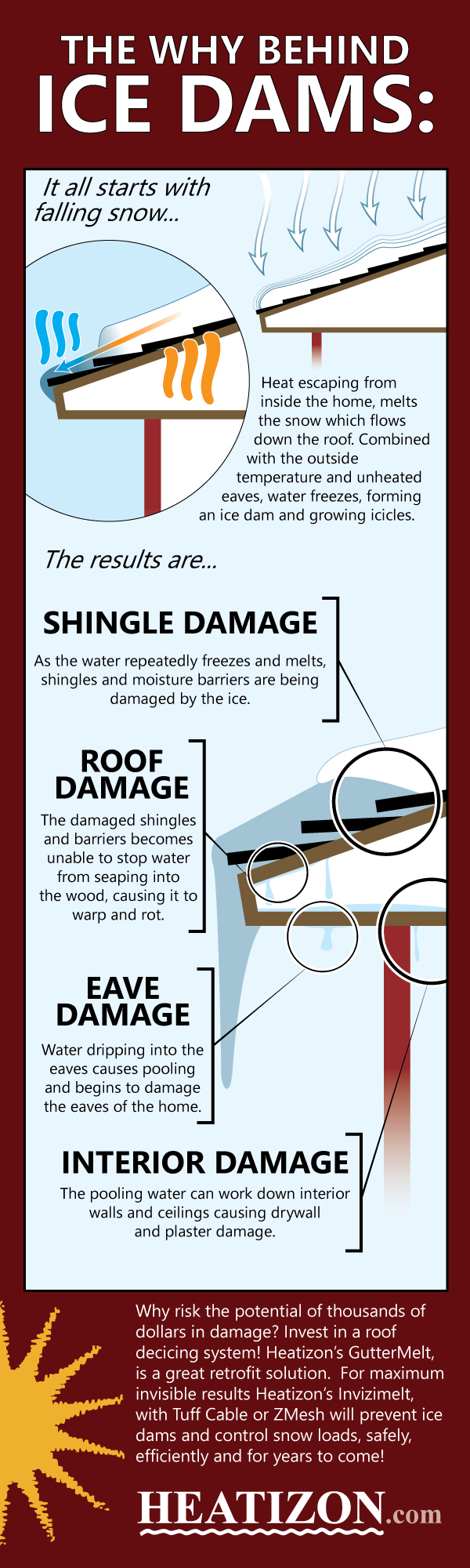
The WHY of ICE DAMS…

Icicles can be cool to look at and even slightly therapeutic to break off your gutters/eaves.  But do you know they are causing damage to your home? Icicles and accompanying ice dams could be causing thousands of dollars of damage to your home. Heatizon has created this infographic to explain “The WHY of Ice Dams.”

Heatizon.com ice dam prevention
Don’t suffer from ice dams anymore!

Check out Heatizon’s Ice Dam solutions.

In 1996 Heatizon Systems was Founded – But What Else Happened?

Heatizon was founded in 1996 and we are celebrating our 20th anniversary this year. As we reflect on the experiences we have had over the past 2 decades, we thought we’d look back at 1996 and see what other events shared our anniversary.

Do you remember any of these?

In The News

  • The Unabomber arrested
  • Dolly the sheep is the first mammal successfully cloned
  • OJ Simpson Trial begins
  • Bill Clinton reelected President of the United States defeating Bob Dole
  • Musician Tupac Shakur shot

Business

  • Apparel company Under Armour founded
  • Networking company Netgear founded
  • Medical information website WebMD launched
  • Steve Jobs returns to Apple, which he helped found years prior

Sports

  • The first season of Major League Soccer (MLS) held
  • Summer Olympics held in Atlanta, GA
  • Dallas Cowboys win Superbowl XXX

Media

  • Cable news channels Al Jazeera and Fox News Channel launched
  • Disney acquired ABC

Film

  • Mission: Impossible and Independence Day released
  • Braveheart wins Best Picture at Academy Awards

A lot more happened in 1996 and much has happened since then, we at Heatizon are grateful for the successes we’ve seen in the last 20 years and look forward to many more!

Distributor Spotlight – Comfort Radiant Heating

Our next distributor spotlight is here! We spent some time with Russell Hacker from Comfort Radiant Heating to talk about Heatizon Products in the Northeast. 

A Heatizon distributor since 2005, Comfort Radiant is headquartered in Clifton Park, NY. For over a decade Comfort Radiant Heating has sold, designed and installed radiant heating systems throughout the Northeast. While Russell primarily serves New York, New Jersey, Connecticut and Massachusetts, Comfort Radiant supplies materials to contractors and homeowners throughout the United States.

“A Full Service Radiant Supplier”

“We are a full service radiant supplier. From original design and layout through installation of floor warming and primary heating systems, surface snow melting and roof deicing systems” says Russell. In addition to the design and install work Comfort Radiant directly performs, they also offer onsite consulting and installation training for contractors working with Heatizon products. Russell also adds “We assist architects in the designing of custom projects to guide them through a project where they may be unfamiliar with the system’s functionality…”

Comfort Radiant has worked on many notable projects over the years. Russell highlighted a few of his favorites for us:

  • ZMesh roof deicing under membrane on the East Greenwich Middle School in Rhode Island

  • Custom designed, hand laid river rock over a Floorizwarm system

  • Tuff Cable floor warming under a marble foyer

  • A Tuff Cable retrofit heated driveway recognized by Forbes.com as “one of the coolest driveways in the U.S.”

Unique and Reliable Products

“Heatizon’s unique low voltage products are unsurpassed in the industry.” Russell says, as he explains that the flexibility of ZMesh and Tuff Cable often make them not only the best option for his clients, but in many cases the only option for unique and challenging applications.

Russell continued “Heatizon follows this up with excellent technical support. If we have a question, they are there to answer it.”

Our distributors are key to our success. Their knowledge and expertise allows customers to have the best experience possible working with our range of electrical radiant heating products. We are grateful for our longstanding relationship with Russell and Comfort Radiant and look forward to seeing what they tackle next.