Author: jallen

The Versatility of Radiant Heat

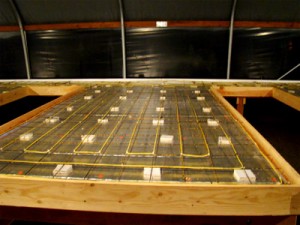
greenhouse with radiant heat
Heatizon Tuff Cable installed in greehouse planter beds.
Photo credit Homestead Furniture

Heatizon’s products utilize electric radiant heat to provide effective deicing, snow melting, and floor or space warming. Every now and again, we get a more “unique” request. Take a look at some of these less traditional projects and get an idea of just how versatile electric radiant heat can be.

Read More

Getting The Most From Your Heatizon System

Winter has arrived in force across North America, although those people utilizing radiant heat may not have noticed yet. We want you to get the most out of your radiant heating system, and have compiled some reminders below.

Floor Warming
There are generally two methods for ensuring enjoyment of your heated floors. If the heated area is used throughout the day, keeping the floor at a consistent temperature ensures that it will always be warm and ready to enjoy.

If you have radiant floor heat in rooms that are used primarily at specific times, we recommend using a programmable thermostat to heat the floors prior to use. Ensure the thermostat is programmed and the heat tested before the cold hits to ensure warm floors.

Snow Melting and Roof Deicing
For outdoor radiant heat systems, operation varies greatly depending on your activation device. In all cases, we recommend checking the system in the late summer or early fall to verify everything is functioning properly before the snow and ice arrive.

Many systems utilize an automated sensor to efficiently melt snow as it falls. These systems require little human interaction to run effectively, however certain sensor models can be adjusted for sensitivity. This adjustment can help you optimize your system for your climate to keep things melting smoothly. Some sensors also have an adjustable “overrun” which allows you to set the amount of time the sensor continues running after the storm. This can be helpful in allowing melted snow to run off the surface so it doesn’t freeze and form ice.

For snow melting systems using manual switches and timers, it is critical to activate the system before a storm. Radiant heat works much more effectively when it stays ahead of the falling snow. Allowing snow to accumulate will slow down melting and use more energy.

Retiring Baby Boomers Driving Interest in Snow Melting Systems

The population of the United States is aging. The number of individuals over 65 is on the rise, and as baby boomers begin to retire, these numbers are expected to increase dramatically. It is estimated that by 2030, this age group will make up 20% of the population.

Snow melting systems, such as heated driveways, sidewalks, and stairs, have risen in popularity in recent years. Contributing to this is a growing population of older individuals looking for greater convenience and reduced snow and ice related hazards.

As culture and healthcare evolves and retirees live independently for longer, automating snow removal can reduce the risk of slip and fall injuries. With modern technology, electric radiant heat can be activated automatically to remove snow and ice. With activation options ranging from timer switches and thermostats, to automated temperature and moisture sensors, there is a solution for any situation.

While it is easy to see the applications this may have at home, snow melting is also very useful for businesses and organizations seeking to protect their clientele and avoid costly lawsuits. Slip and fall injuries cost businesses millions each year. This risk can be reduced with a snow melting system.

Heatizon offers multiple snow melting solutions based around our Hott-Wire and Tuff Cable products. Capable of installation in new and existing surfaces, our electric snow melting systems provide peace of mind to anyone ready to retire the snow shovel.

Tips for Installers, Part 3: Final Testing and Installing the Control Units

This is the final entry in our series of installation tips. This post includes covering and testing the heating element, and the installation of the control units. For information on planning the layout and starting the process, see Part One and for tips on installing the heating element and activation devices visit Part Two.

Covering the Element

Cover the element as instructed in the installation manual, taking precautions to avoid damaging the heating element. Once the element has been covered, another test should be made. Compare the results of this element test with the one taken during installation of the element. If the results don’t match the heating element should be checked for damage.

Installing the Control Units

The control units or relay panels are installed in the location selected by the customer. The installation manual and wiring diagrams provide instructions for making the connections. Once installed, the device should be tested to ensure it properly turns the system on and off. After this, the final start up and post installation tests are performed and recorded for warranty purposes. It is a good idea to meet with the client and review the operation of the system upon completion.

This is the final entry in a three part series of installation tips. Part 1 is located here. Part 2 can be found here.

For more on installing Heatizon products, including manuals and videos, visit the Installation area of our website.

Why Should You Consider Radiant Heat?

As the cold months approach and temperatures drop, every home owner is faced with increasing power bills. It is costly to maintain warmth throughout your home if you are using a conventional furnace as your main heating source. Radiant heating offers many benefits and the decrease in your power bills is just the beginning!

Radiant heating products like ZMesh and Tuff Cable offer a clean, quiet alternative to traditional heating systems. That means no more cold floors, drafts, heat loss and no more cold or hot spots in a room.

Our radiant heat products can be installed in new construction or worked into any type of remodel or retrofit.

Using a low voltage electric radiant system, like Tuff Cable, means that 99% of your energy is used for heating and there are no moving parts or service required. Tuff Cable and ZMesh can be installed in any size room and each room, or zone, is operated by a thermostat that you can program. Just set it and forget it! Heatizon systems are self-regulating – you set the temperature for each zone and you never have to worry – and that means smaller power bills, since you are not heating rooms you are not using.

ZMesh and Tuff Cable are both made from recycled materials in the United States of America. They also come with a 25 year warranty, are 100% efficient and can be controlled by thermostat or sensor. You can cover them with virtually any type of floor covering – hardwood, stone, tile, laminate, linoleum or vinyl. Just imagine the feeling of getting out of bed stepping on warm floors!

Now Is the Perfect Time to Install Radiant Heating

Summer brings with it a multitude of outside chores of home remodeling projects, whether it be landscaping your yard, pouring a new cement patio, re-shingling the roof or repainting the home. What many Utah homeowners don’t realize is that summer is the perfect time to install a snow-melt radiant heating system.

According to Steve Love, sales manager for Heatizon, snow-melt and interior floor heating systems have been around for about 25 years and are becoming more and more popular in and outside of Utah. Heatizon manufactures a complete line of low-voltage radiant heating products.

“Imagine snow and ice automatically melting from your driveway and sidewalks. Or your tile and hardwood floors being comfortably warm to your bare feet,” Love explains. Unlike forced air systems, radiant heat, which is installed underneath flooring, warms objects, not just the air. It’s a much more comfortable and even heat.

Heatizon’s radiant heat systems use one of two products that can be installed in new construction or retrofitted to existing applications. The Tuff Cable, a copper element, is used in snowmelting systems for driveways or sidewalks. In an existing system, technicians cut thin, inch-deep channels that are 6 inches apart into the pavement, which is where the cable is laid and then closed with a sealant. For new driveways or walkways, the cable is installed just before the concrete in poured.

One of the most recognized local projects that Heatizon undertook using The Tuff Cable was Utah’s TRAX light rail system. The snow melting system was installed on all the passenger station access ramps to keep the area from snow during the winter. One of its largest projects- 20,000 square feet- was the LDS Conference Center, where the cable was installed on plaza sidewalks and stairs.

For interior flooring applications, as well as under-shingle roof systems, Heatizon uses Z Mesh, a bronze wire mesh, which is placed over an existing concrete floor or on top of the wood subfloor. Tile, carpet or wood flooring can then be placed over the heating system.  In roofing systems, the mesh is installed underneath the shingles, making it virtually invisible.

An in-floor radiant system is ideal for homeowners who are finishing off their basement, yet not sure how to make walking across cold floors more bearable during the winter.

For Richard Hull, who is building an addition on to his father’s 1950 home in Hooper, installing a Heatizon system was a no-brainer. In order to install a conventional forced-air system, he would have had to run new ductwork throughout the new part of the house, which he says would have cost the same as installing a radiant system. Hull also had managed the 7,000-square foot Hidden Springs Resort Ranch in Nephi, which had been heated by a Heatizon system. It was only after living there that he was convinced that radiant heat was the only way to go.

“It’s a more efficient, uniform heat that is distributed more evenly because the heat rises from the floor,” he says. “Also, I anticipate my heating costs will be about the same as if I had a forced-air system.”

“What makes the technology so unique is that Heatizon uses a low-voltage system, ranging from 8 to 30 volts AC,” Love notes, “eliminating safety concerns for water, cuts and nails or screw driven through the element.”

Besides safety, radiant heat offers a number of other benefits over the traditional heating systems- one being that radiant heat is 51 percent more efficient than forced-air systems, making it less expensive to run.

“With a radiant heat system, you can reduce your heating bill between 23 to 26 percent, whether it be natural gas or electricity,” Love says.

A Heatizon System does not need to cycle constantly, like other systems, making it more cost-effective. Therefore, homeowners can program the system to go on and off at specific times based on their needs. For example, to run a zone of a snowmelting system during a snowstorm would cost about $1.53 for four hours (based on Salt Lake City electricity rates).

From a health standpoint, radiant heat is also cleaner and environmentally friendly. With a forced-air system, pollen, dust, and other particles are circulating throughout the air, making it uncomfortable for those who suffer from allergies or asthma.

With other heating system, homeowners are limited on where they can place furniture, wall coverings and decorations because of register and radiator placement.

Because all Heatizon systems are solid-state and are not comprised of moving parts, homeowners do not need to worry about maintenance. There is also no risk of broken pipes or tubes or expensive repairs resulting from water damage.

Because it offers such high-quality and durable products in its heating systems, Heatizon provides its customers with a 25-year warranty.

For more information on Heatizon Systems products, call 801-293-1232 or visit the Web site at heatizon.com.
Radiant Floor Warming Design

Radiant floor warming is a wonderful addition to any living or working space. The warm floor makes the space the most comfortable in the entire building.  Designed to provide years of trouble free service, high quality floor warming systems are designed to last substantially longer than the flooring covering itself.  Given their long life expectancy and the repair/replacement expense incurred if the heating element or tubing gets damaged or, improperly installed, a significant amount of time should be devoted to the design, product selection and installation of radiant floor warming system.

Design

Designing a radiant floor warming system is relatively easy, provided; a few simple rules are followed.  Listed below please find a list of simple rules for designing a radiant floor warming system:

  1. The design should deliver 7.5 to 12 watts (25 to 41 Btu) per square foot to effectively warm floors.  The National Electric Code limits the maximum heat that should be installed in the floor to 15 watts per square foot.
  2. Only the floor areas where the occupants will stand or walk require warming in order for a radiant floor warming system to effective.  Radiant space heating however may require different coverage to satisfy the requirements of a Heat Load or Loss Calculation.
  3. Proper spacing of the heating element or tubing is very important because the human foot is very temperature sensitive and even a few degrees temperature differential will be noticed.
  4. The spacing of the heating element or tubing will vary depending upon the R-value of the insulation below the sub-straight, the sub-straight material, what ever will cover the heating element or tubing, and the floor covering.
  5. Keep the heating element or tubing away from the base of the toilet and/or bidet because the wax ring that makes the drain water tight may be compromised by the heat.
  6. Determine if it is desirable to heat the shower floor or the shaving bench.
  7. Avoid one size fits all products that require the project to adjust to the radiant floor warming product rather than the other way around.

Once the design is complete the best products for that design can be determined and a final selection made.

Product Selection

Often times, product selection occurs simultaneously with the design process.  The nature of the design process helps focus on the advantages and disadvantages of different technologies and thus helps determine which are best suited for the project.  At the very minimum the design process should help eliminate most of the competing radiant floor heating technologies from further consideration leaving less than a hand full for further evaluation.

Remember number 7) under design and do not allow the product to control the project.  Since many competing products are available and they differ in technology, quality and warranty coverage, most buyers are well served by contacting a radiant floor warming professional to assist in determining which is best suited for their needs and their project.

Installation

More difficult than design and product selection (but equally deserving of attention to detail), is the proper installation of the radiant floor warming system.  As a matter of fact incorrect installation and/or product damage during installation are the two leading causes of problems in the radiant floor warming industry.

No doubt the best way to insure proper installation is to choose a product made by a manufacturer that has a comprehensive installation manual, offers unlimited technical support and has been in business for more than a couple of years.

Steven Bench is Managing Member of Heatizon Systems a leading manufacturer of radiant snow melting, floor warming, roof snow and ice melting, pipe warming, and radiant space heating products located in Murray, Utah.      

The Benefits of Radiant Heat

The Product

Z Mesh, Heatizon Systems bronze mesh heating element, is so advanced that it can be installed under non-conductive roof coverings, ceramic tile, stone, laminant flooring, carpeting, and hardwood flooring. Typical installations for Z Mesh include total space heating, roof snow melt, and floor warming. Z Mesh is made to go on something…like concrete and wood sub-floors and sub-roofs.

Heatizon Tuff Cable heating element is a very durable coated copper cable that is chemical and gasoline resistant. It is designed to be installed in asphalt, concrete, tile mortar bed, thin set, or a Heatizon Heatsink Kit. Typical installations for Tuff Cable include total space heating, floor warming, snow melting, and roof snow melt. Tuff Cable is made to go in something…like asphalt, concrete, a sand bed under pavers or a heatsink kit.

Benefits or Advantages:

Radiant Heat is more comfortable and efficient than forced air or convection heating. In space-heating, occupants feel more comfortable even when the space air temperature is maintained lower than typical forced air heating. Radiant heat results in less heat-loss from a room. Forced air registers and baseboard heat strips are always located on outside walls between windows. These systems heat air that comes in contact with the external windows and walls to temperatures much higher than the desired room temperature. This results in more heat-loss from the space. Heatizon System’s products provide a uniform heat flux from the floor into the space, resulting in less heat-loss from the room.

Mass Warming results in less temperature variations in the space being heated. The flooring material is heated by the element which then radiates the heat into the space. The floor surface can be maintained at a very uniform temperature which prevents the hot and cold temperature swings that occur as other systems cycle on and off. Warming the mass of the floor results in what is called thermal capacitance. This allows the space to remain warm even when extreme temperatures occur. Essentially, heat energy is stored in the mass of the floor and other objects in the space. This applies to any type of floor–wood, concrete, tile, etc.

Efficiency of the Heatizon Systems products is excellent. When compared with a heat pump, forced-air furnace or baseboard heating system, Heatizon Systems low-voltage products are more efficient watt for watt. An article in the July, 1996 ASHRAE Journal, “Radiant Heating for Thermal Comfort” reported on experimental results comparing a heat pump, baseboard heat and radiant heat. The radiant heating system consumed 33% less energy than the heat pump system and 52% less energy than the baseboard system.

Reliability of Heatizon Systems products are superior. The entire system is solid-state, has no moving parts to wear out, and has nothing that requires routine maintenance. There are no water lines to break or crack. Our products have been satisfying the needs of hundreds of customers since 1979. Both z-mesh and Tuff Cable are easy to repair in the event they get cut or damaged. The controls allow for power failures or spikes, yet brings the system back on-line as quickly as possible.

Comfort of radiant heat is superior because the radiant heat flux is uniform throughout the heated space. There are no “point-source” hot spots like there are in baseboard and forced air systems. Thermal comfort is sustained as the system cycles on and off, because the heated mass temperature remains almost constant.

Convenience of installation is superior to any other system. There is no ducting to deal with, no lost floor or wall space. Other than a thermostat, Heatizon Systems products are out of sight. Retrofitting is easy. Adding the system to an existing space is much easier than installing a hydronic or high voltage system.

Safety is a major advantage of the Heatizon System. Heatizon Systems products are ETL listed to UL standards 1673, 1693, and 1561.

Quiet and clean. The Heatizon System produces no more noise than a light fixture. There is no fan starting and stopping, no filter to change or clean, no valves to wear out, and no pipes to rattle.

Life-Cycle Costs are less, especially when heating exterior concrete surfaces. The cost to replace a driveway, sidewalk or patio is many times the cost of the Heatizon Systems products.

Typical Installations:

Finishing a Basement is an excellent application for Heatizon Systems. Z Mesh heating element can be placed directly on the concrete with padding and carpet installed over the top.

Tile is cold to step on in bare feet both summer and winter. The Heatizon Systems Z Mesh or Tuff Cable heating elements can be installed under tile in bathrooms, kitchens, entries, etc. making them nice and warm to the touch.

Hardwood Floors tend to be cold. Z Mesh can be installed between the subfloor and the hardwood floor and maintains the surface at a constant temperature that is comfortable to the touch.

Nurseries or anywhere that babies crawl is ideal to keep warm. Small children are always close to the floor. Heatizon Systems floor warming products keep them from getting chilled.

Driveways, Sidewalks and Porches can be kept clear of snow and ice. Heatizon systems nearly 100% efficiency keeps operating costs reasonable and helps your concrete last longer, because it is not subjected to salt or snow-melting chemicals.

Handicap Ramps are of no value if they are not clear of snow and ice.

Parking Ramps and Loading Docks are often sloped and difficult to clear of snow and ice.

Remote Locations and Moderate Climates where electricity is the only utility available are ideal applications for installing the Heatizon System.